
 Spanish
When a Truck Folds on a Kansas City Highway
Key Takeaways: In Missouri, you usually prove fault after a jackknife truck crash by showing that the driver, the trucking company, or another party broke a duty of care and that this caused your injuries. That duty can come from the highest-degree-of-care rule in RSMo § 304.012, the following distance laws in RSMo §§ 304.044 and 304.017, or the federal trucking safety rules adopted through RSMo § 307.400. Bad weather generally does not excuse a professional driver. Fatigue, poor brake upkeep, or badly loaded cargo can also make the carrier, loaders, or repair shops responsible. Key evidence includes ELD logs, black box data, maintenance and loading records, crash reports, and video. The trucking company holds much of it, and it can disappear quickly unless someone acts to save it. Under Missouri’s pure comparative fault system, your own share of fault generally reduces your recovery but does not bar it. Because Missouri limits joint and several liability, it is important to name every responsible party. Filing deadlines apply, generally five years for personal injury and three years for wrongful death, so it is wise to talk with an attorney early.
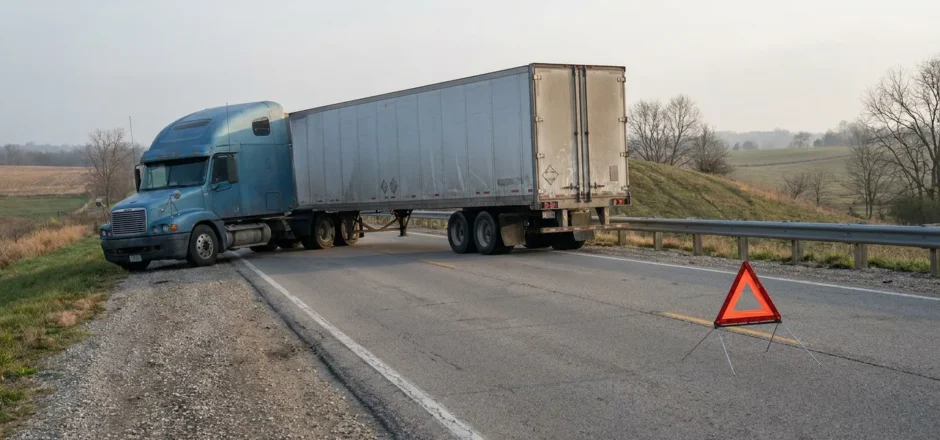
A jackknife can happen in seconds, when a tractor-trailer’s cab and trailer skid into a sharp "V" and block several lanes. If you or someone you love was hurt in a crash like this on I-29, I-435, or US-169 through the Northland, you probably have questions. Who caused it? Was it the weather? Who pays for the medical bills and the work you have missed? In Missouri, proving fault after a jackknife usually means showing that the driver, the trucking company, or another party broke a duty of care, often a specific state statute or federal trucking rule, and that this caused your injuries.
You do not have to work through these questions by yourself. At Northland Injury Law, our team talks with you, not at you, and keeps you informed at every step. Call us at 816-400-4878 or contact us now to talk about what happened.
Why Jackknife Crashes Are Rarely "Just an Accident"
A jackknife usually happens when the truck’s wheels lose traction, most often after hard braking, too much speed for the conditions, or a load that shifts. Ice on the Broadway Bridge or a sudden slowdown near the Paseo can trigger one. Still, bad weather generally does not excuse a professional driver, because Missouri law expects drivers to adjust to the road in front of them. A trucking company may argue that a truly sudden emergency caused the crash, but whether that works depends on the facts.
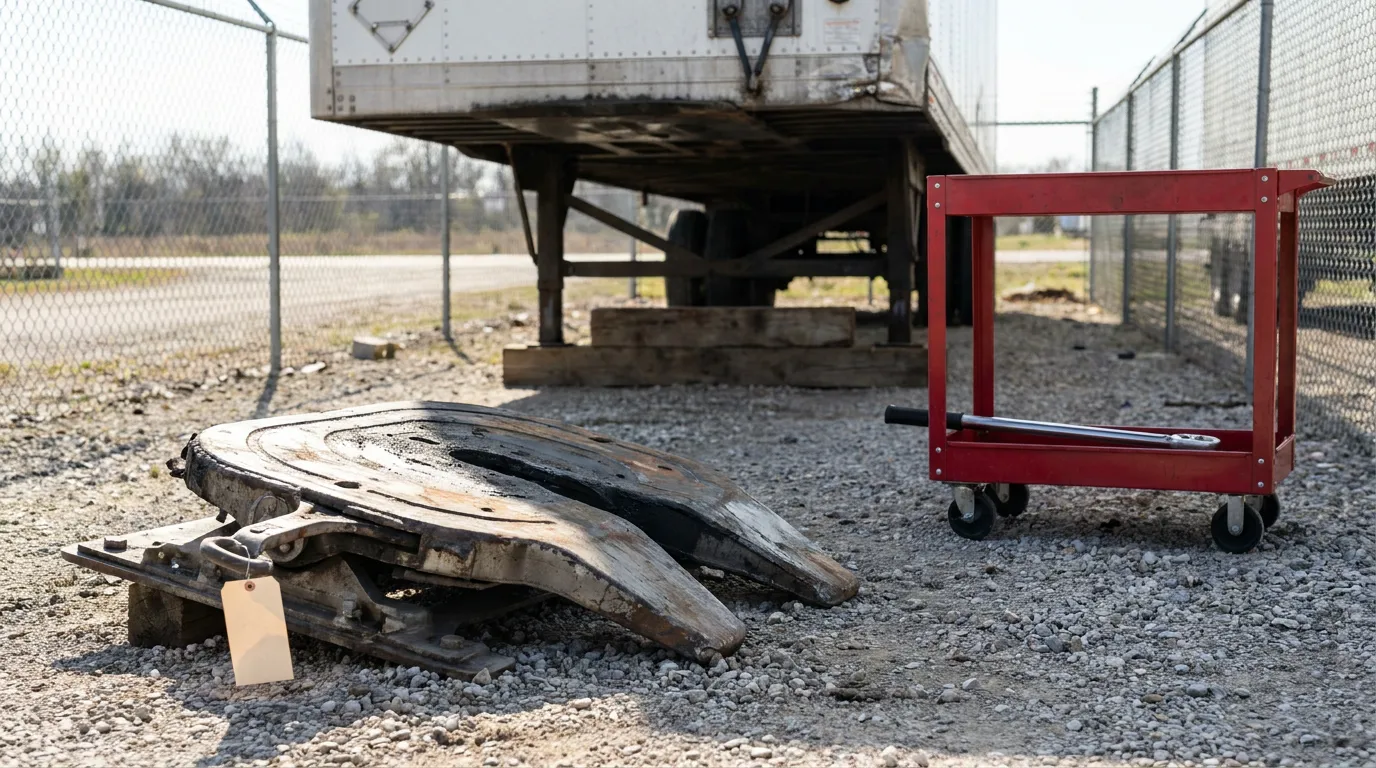
Many jackknifes trace back to choices made well before the crash. A tired driver pushing past federal hour limits, worn brakes that were never fixed, or badly loaded cargo can each play a part. That is why your claim may involve more than one responsible party, and why our team looks past the driver to the carrier, loaders, and repair shops.
The Missouri Laws That Help Prove Jackknife Negligence
Several Missouri statutes set clear standards that truck drivers and carriers have to meet. When someone breaks a safety statute and the injured person is someone the law was meant to protect, Missouri courts may treat the violation as negligence per se (negligence by law), or as strong evidence of negligence. You still have to show that the violation caused your injuries.
The Duty to Drive With the Highest Degree of Care
Under RSMo § 304.012.1, every Missouri driver must drive in a careful and prudent manner, at a speed that does not endanger people or property, and must use the highest degree of care. Driving too fast for the conditions, braking too hard, or taking a curve too fast may each break this duty. Under RSMo § 304.012.3, a violation is a class B misdemeanor, or a class A misdemeanor if it involves a crash. A ticket or conviction can support a civil fault argument, but it does not automatically decide the civil case.
Following Distance Rules for Trucks
Missouri has a specific spacing rule for large trucks. Under Missouri’s truck following distance law, RSMo § 304.044.2, a truck driver on a highway outside a business or residential district may not follow within 300 feet of another truck or bus, though passing is still allowed. RSMo § 304.044.1(2) defines "truck" broadly to include tractors, trailers, semitrailers, and any combination used to haul property. A violation is a class C misdemeanor under RSMo § 304.044.3.
Separately, RSMo § 304.017.1 bars any driver from following more closely than is reasonable and prudent, given speed, traffic, and road conditions. On wet or icy Kansas City roads, this rule matters most. A trucker who tailgated and then had to slam on the brakes may have broken one or both of these laws.
Federal Safety Rules Adopted Into Missouri Law
Under RSMo § 307.400.1, no one may operate a commercial motor vehicle in Missouri unless it is equipped and operated as 49 CFR Parts 390 through 397 require, whether the trip crosses state lines or stays within Missouri. The statute has some exceptions. These federal rules cover hours of service, driver qualifications, inspection and maintenance, and cargo securement. Rules issued under Missouri’s commercial vehicle safety statute must require that every truck, trailer, and part stay in safe condition, and that carriers report commercial vehicle crashes to the Department of Public Safety.
Under RSMo § 307.400.3, officials may place vehicles and drivers that fall short of these rules out of service. A history of out-of-service orders may help show that a carrier knew about safety problems, though whether a court allows that evidence depends on the case.
Evidence That Can Prove Fault in a Jackknife Truck Accident
Proving fault comes down to evidence, and the trucking company holds much of it. Some of it can be erased or thrown away if no one acts to save it. Our guide to preserving truck crash evidence goes into more detail, but key items often include:
- Electronic logging device (ELD) data and driver hours-of-service records
- Engine control module ("black box") data showing speed and braking
- Brake inspection and maintenance records
- Cargo loading and securement documents
- Police crash reports and commercial vehicle crash reports
- Dashcam footage, traffic camera video, and witness statements
- The driver’s qualification file and the carrier’s out-of-service history
| Evidence | What It May Show |
|---|---|
| ELD and log data | Fatigue or hours-of-service violations |
| Black box data | Speeding or sudden hard braking |
| Maintenance records | Brake or tire neglect |
| Loading records | Shifted or unsecured cargo |
💡 Pro Tip: Keep every letter, voicemail, and email from the trucking company’s insurer, and think twice before giving a recorded statement. Early settlement offers often come before anyone knows how badly you are hurt.
How Shared Fault Can Affect What You Recover
Missouri follows a pure comparative fault system, so your own share of fault generally reduces your recovery instead of barring it. For example, if a jury found you 10 percent at fault, your damages would usually drop by 10 percent. Insurers sometimes try to shift blame onto injured drivers, so careful evidence matters.
Missouri also limits joint and several liability under RSMo § 537.067. In general, a defendant found less than 51 percent at fault pays only its own share of the damages, while a defendant found 51 percent or more at fault may owe the full amount. So naming every responsible party, such as the driver, the carrier, a broker, or a repair shop, can matter a great deal.
Deadlines That Make Acting Quickly Important
Missouri sets time limits for filing truck crash claims, and missing one can end a case. RSMo § 516.120 currently governs personal injury claims and generally allows five years. Laws can change, so check the current deadline with an attorney.
For families who lost a loved one, RSMo § 537.100 generally sets a three-year deadline from the date of death for wrongful death claims. RSMo § 537.080 defines who may bring that claim. Claims against a government body may also come with separate notice rules, shorter deadlines, and immunity issues.
💡 Pro Tip: Even if you have years left to file, evidence like video footage and black box data can disappear within weeks. A prompt letter demanding that the company save it can make a big difference.
Why Kansas City Families Turn to Our Team
A jackknife case often involves life-changing injuries, several defendants, and large commercial insurance policies. Our attorneys bring more than 50 years of combined experience to cases like these, including serious injury and wrongful death claims against commercial carriers. We have recovered millions for clients, and we push for the full coverage available instead of a quick settlement. Past results do not guarantee a similar outcome in your case.
We live and volunteer in the Northland, and we treat clients like neighbors. Our 30-Day Satisfaction Guarantee reflects that commitment. If you need a Missouri truck accident attorney, we will explain each step in plain language, in whatever language you are most comfortable speaking.
Frequently Asked Questions
1. Can bad weather be blamed for a jackknife truck accident?
Weather alone generally does not excuse a truck driver. Under RSMo § 304.012.1, drivers must adjust speed and use the highest degree of care for the conditions.
2. Can the trucking company be held responsible, not just the driver?
In many cases, yes. A carrier may be liable for what an employee driver does on the job, and for its own negligence, such as poor maintenance, careless hiring, or breaking federal rules adopted through RSMo § 307.400.
3. What if I was partly at fault?
You may still recover under Missouri’s pure comparative fault system. Your damages would generally drop by your percentage of fault.
4. Does a traffic ticket prove the truck driver was at fault?
A ticket can support a fault argument, but it does not settle the civil case by itself. Courts weigh it alongside other evidence, such as black box data and witness accounts.
5. How do I prove fault in a jackknife crash if the trucking company won’t share records?
An attorney can send demands to save evidence and use court tools to get logs, maintenance files, and electronic data. Acting early can help keep that evidence from being lost.
Taking the Next Step After a Jackknife Crash
Proving fault after a jackknife usually means tying the crash to a broken duty under Missouri statutes or federal trucking rules, then backing that up with solid evidence. Shared fault rules and filing deadlines make it important to start early and to identify every responsible party.
You do not have to figure this out alone, and you do not have to decide anything today. Reach out to Northland Injury Law at 816-400-4878 or schedule your free consultation, and our team will listen, answer your questions, and help you understand your options.
Disclaimer: This content is for informational purposes only and is not legal advice. Every case is unique, and results may vary. Consult an attorney about your specific circumstances.