
 Spanish
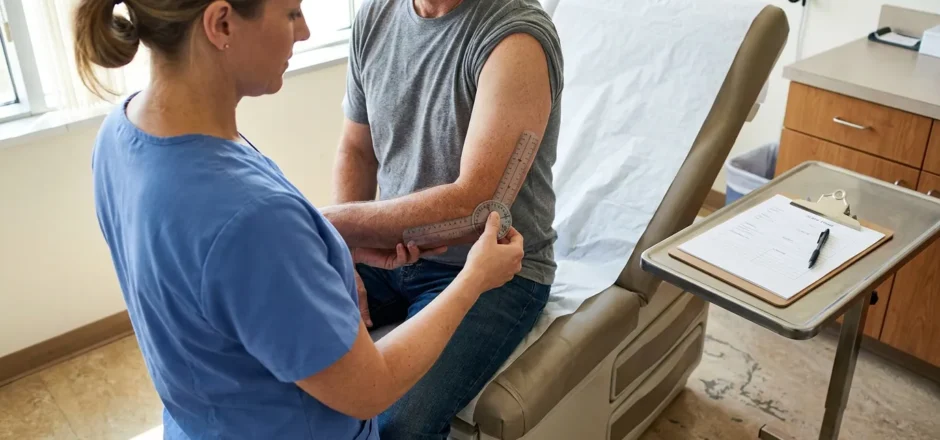
What Missouri’s Body Part Disability Chart Means for Your Workers’ Comp Claim
Key Takeaways: Missouri’s permanent partial disability chart, found in Mo. Rev. Stat. § 287.190.1, sets a maximum number of weeks of benefits for each body part based on how high up the loss occurs, such as 232 weeks for an arm at the shoulder or 175 weeks for a hand at the wrist. To read the chart, find the body part and level of loss, apply your disability percentage to the maximum weeks, then multiply by the weekly PPD rate in effect on your date of injury. PPD is generally paid on top of any temporary disability benefits, and § 287.197 covers job-related hearing loss. Back, neck, and other whole-body injuries aren’t on the schedule and are generally rated against 400 weeks for the body as a whole. Doctors chosen by the insurer may give low ratings, and a 10-point gap could cost weeks of benefits, so it may pay to question your rating before you settle. Avoid common mistakes like settling before maximum medical improvement, missing secondary injuries, or overlooking possible third-party claims.
Missouri’s permanent partial disability chart tells you the most weeks of benefits a specific body part injury may be worth under state law. After a serious work injury, like an amputation on a factory line in North Kansas City or a crushed hand at a Liberty warehouse, you may hear doctors and adjusters talk about "ratings" and "weeks." To read the chart, find the body part, find how high up the loss occurred, and note the maximum weeks listed. A partial injury is generally worth a share of that maximum. Then multiply the weeks by your weekly PPD rate to get an estimated dollar figure.
If an insurance company has given you a rating that doesn’t match how your injury affects your life, you can ask questions before you sign anything. At Northland Injury Law, our team talks to you, not at you, and we back that up with our 30-Day Satisfaction Guarantee. Call us at 816-400-4878 or contact us now for a free, no-pressure talk.

Where the Chart Comes From in Missouri Law
Missouri’s statutes spell out the PPD body part chart. Chapter 287 of the Missouri Revised Statutes holds the state’s workers’ compensation laws. Within that chapter, the Missouri schedule of losses appears in Mo. Rev. Stat. § 287.190.1, which lists body parts alongside a set number of weeks for each.
Under Mo. Rev. Stat. § 287.190.1, PPD covers three types of loss. You may receive benefits for:
- Loss of a body part by amputation
- Total loss of use of the body part
- Partial loss of use
PPD is generally paid on top of any temporary total or temporary partial disability benefits you already received. Your average weekly wage sets the weekly PPD rate, subject to maximum and minimum limits tied to your date of injury under § 287.190.5. Temporary benefits generally don’t reduce the PPD you may be owed later, though payments that overlap for the same period may be treated differently.
How 2005 Reforms Changed the Rules
In 2005, Missouri lawmakers made major changes to how judges decide these claims. Senate Bill 1 (2005) overhauled Chapter 287. Among other things, it replaced the old rule that courts should read the law liberally in favor of workers with a rule of strict construction (now in § 287.800). Because of that, the exact wording of the schedule and the medical evidence behind your rating can carry real weight.
Reading the Permanent Partial Disability Chart Missouri Uses, Step by Step
Reading the chart takes three steps: find the body part, apply the percentage, and figure the dollars. Disputes can come up at each step.
Step One: Find the Body Part and Level of Loss
As a rule, the higher up the limb the loss happens, the more weeks it is worth. The table below shows key values from Mo. Rev. Stat. § 287.190.1, Schedule of Losses items (1) through (29).
| Body Part and Level | Maximum Weeks |
|---|---|
| Arm at the shoulder | 232 |
| Arm between shoulder and elbow | 222 |
| Arm at the elbow joint | 210 |
| Arm between elbow and wrist | 200 |
| Hand at the wrist joint | 175 |
| Leg at the hip joint (or too close for an artificial limb) | 207 |
| Leg at or above knee, with stump for artificial limb | 160 |
| Leg at or above ankle, below knee | 155 |
| Foot in the tarsus | 150 |
| Foot in the metatarsus | 110 |
| Sight in one eye, complete loss | 140 |
| Deafness in both ears, complete | 180 |
| Deafness in one ear (other ear normal), complete | 49 |
The chart also lists fingers and toes joint by joint. A thumb is 60 weeks at the proximal joint and 45 at the distal joint. The index finger is 45, 35, and 30 weeks at the proximal, second, and distal joints. Middle and ring fingers are 35, 30, and 26 weeks, and the little finger is 22, 20, and 16 weeks. The great toe is 40 weeks at the proximal joint and 22 at the distal joint. Any other toe is 14, 10, or 8 weeks, depending on the joint.
Step Two: Apply the Percentage of Loss
Most injuries don’t involve total loss, so the weeks are generally prorated. For example, a 25 percent rating at the shoulder would equal 58 weeks (25 percent of 232). The judge sets the final percentage based on all the evidence, and it doesn’t have to match any one doctor’s rating.
This step often decides the case. In our experience, doctors chosen by the insurer may give lower ratings than a treating doctor or an independent doctor would. A gap of just 10 percentage points at the shoulder equals about 23 weeks of benefits.
💡 Pro Tip: Keep a simple journal of what you can’t do anymore, like gripping tools, climbing ladders, or picking up your grandkids. Those daily details can help support a fair rating.
Step Three: Multiply by Your Weekly Rate
Multiply the weeks by the weekly PPD rate in effect on your date of injury. Under subsection 5 of § 287.190, that rate is generally two-thirds of your average weekly wage, subject to a maximum and minimum that depend on your date of injury. Because these limits change each year, check the current Division of Workers’ Compensation rate chart or talk with our team before you rely on any number.
Hearing Loss and Special Situations
Job-related hearing loss follows its own section of the statute. Under Mo. Rev. Stat. § 287.197, total work-related hearing loss is generally worth up to 49 weeks for one ear and 180 weeks for both ears. Statutory formulas set the value of partial loss, and strict notice and exposure rules also apply.
Some injuries don’t fit on the schedule at all. Back, neck, brain, and other whole-body injuries are generally rated as a percentage of 400 weeks for the body as a whole. When several injuries combine, or a prior disability is involved, the analysis gets harder. Our guide on the 400-week disability benefit limit explains how larger claims can run into statutory caps.
Common Mistakes That Shrink PPD Awards
One of the biggest mistakes is accepting the first rating without question. Other problems we often see include:
- Settling before you reach maximum medical improvement
- Missing a secondary injury, like a shoulder strained from making up for a damaged hand
- Overlooking a third-party claim against a careless subcontractor or the maker of a defective machine
A third-party claim is a separate civil lawsuit, not part of the workers’ comp process. It may let you recover losses that workers’ comp generally doesn’t cover, such as pain and suffering. Deadlines apply, and your employer or its insurer may have a lien on part of any recovery under § 287.150.
💡 Pro Tip: If a machine or tool caused your injury, ask that it be kept as is. That equipment may be key evidence in a product liability claim.
Why Experienced Guidance Matters for Serious Injuries
When an injury is permanent, the rating can affect your finances for years. Our attorneys bring more than 50 years of combined experience and have recovered millions for injured clients, including verdicts and settlements in the $1.5 million to $2 million-plus range. Past results don’t guarantee a similar outcome. We’ve been voted #1 Accident Lawyer and Best of the Northland of Kansas City. A permanent partial disability chart Missouri lawyer can review your medical records, challenge low ratings, and look for other sources of recovery.
Frequently Asked Questions
1. Is the chart amount what I’ll actually receive?
Not always. The chart lists maximum weeks for a total loss. Most claims involve a percentage of that maximum, multiplied by your weekly rate.
2. Who decides my disability percentage?
Doctors generally give ratings, and those ratings can differ. The parties may settle disputes, or an administrative law judge at the Missouri Division of Workers’ Compensation may decide after weighing all the evidence.
3. Can I receive PPD after temporary disability benefits?
Generally, yes. Under Mo. Rev. Stat. § 287.190.1, PPD is paid on top of temporary total or temporary partial disability benefits.
4. Does the chart cover back injuries?
No. Back injuries are generally rated as body-as-a-whole injuries, based on 400 weeks.
5. Is hearing loss covered?
It may be. Mo. Rev. Stat. § 287.197 provides up to 49 weeks for total job-related hearing loss in one ear and 180 weeks for both ears.
Turning Weeks Into Real Recovery
The Missouri schedule of losses gives you a starting point, but a fair outcome depends on accurate ratings and complete evidence. Once you know how the PPD body part chart works, you may be better able to spot a low offer. Every case depends on its own facts, so get answers before you sign anything final.
Don’t wait. Pursue the benefits you may be owed, with a team that treats you like a neighbor. Reach out to Northland Injury Law at 816-400-4878 or schedule your free consultation. Our 30-Day Satisfaction Guarantee means you can move forward with confidence.
Disclaimer: This content is for informational purposes only and is not legal advice. Every case is unique, and results may vary. Consult an attorney about your specific circumstances.