
 Spanish
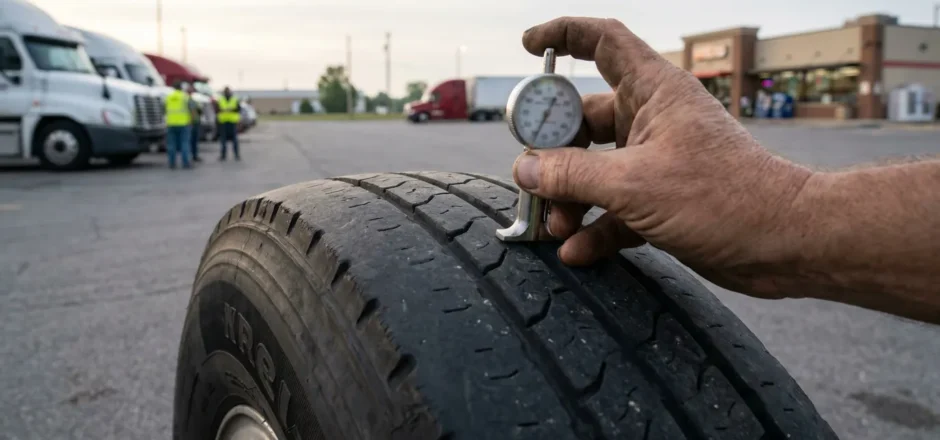
Steer Tire Tread Depth Rules Every Kansas City Crash Victim Should Know
Key Takeaways: Under 49 CFR 393.75(b), a semi truck’s front steering axle tires must have at least 4/32 inch of tread depth, twice the 2/32-inch minimum that 49 CFR 393.75(c) sets for other tires. Steer tires face a higher standard because a front tire blowout can make the driver lose control almost at once. Mo. Rev. Stat. § 307.400.1 adopts these federal rules for trucks that stay in Missouri and trucks that cross state lines, with only a few exceptions, and state officers can enforce them on Kansas City roads. A worn steer tire, along with inspection reports and maintenance records, can help show a trucking company was careless. The driver, carrier, tire shop, or maker may share the blame. Most Missouri injury claims must be filed within five years. Wrongful death claims generally must be filed within three years. Evidence like tire debris and electronic data can disappear fast, so act early.
Under federal law, the tires on a semi truck’s front steering axle must have at least 4/32 of an inch of tread depth, measured at any point on a major tread groove. That rule comes from 49 CFR 393.75(b), and it is twice the 2/32-inch minimum that 49 CFR 393.75(c) sets for all other tires. If you or someone you love was hurt in a truck tire blowout on I-29, I-435, or US-169 through the Northland, that small number could matter a lot. A worn steer tire may help show that a trucking company skipped upkeep the law required. This guide explains what the rule says, how Missouri enforces it, and what it could mean for your case.
If a tire failure turned your life upside down, you don’t have to sort it out alone. Our team at Northland Injury Law talks to you, not at you, and we’ll keep you updated at every step. Call us at 816-400-4878 or contact us now to talk through your situation.
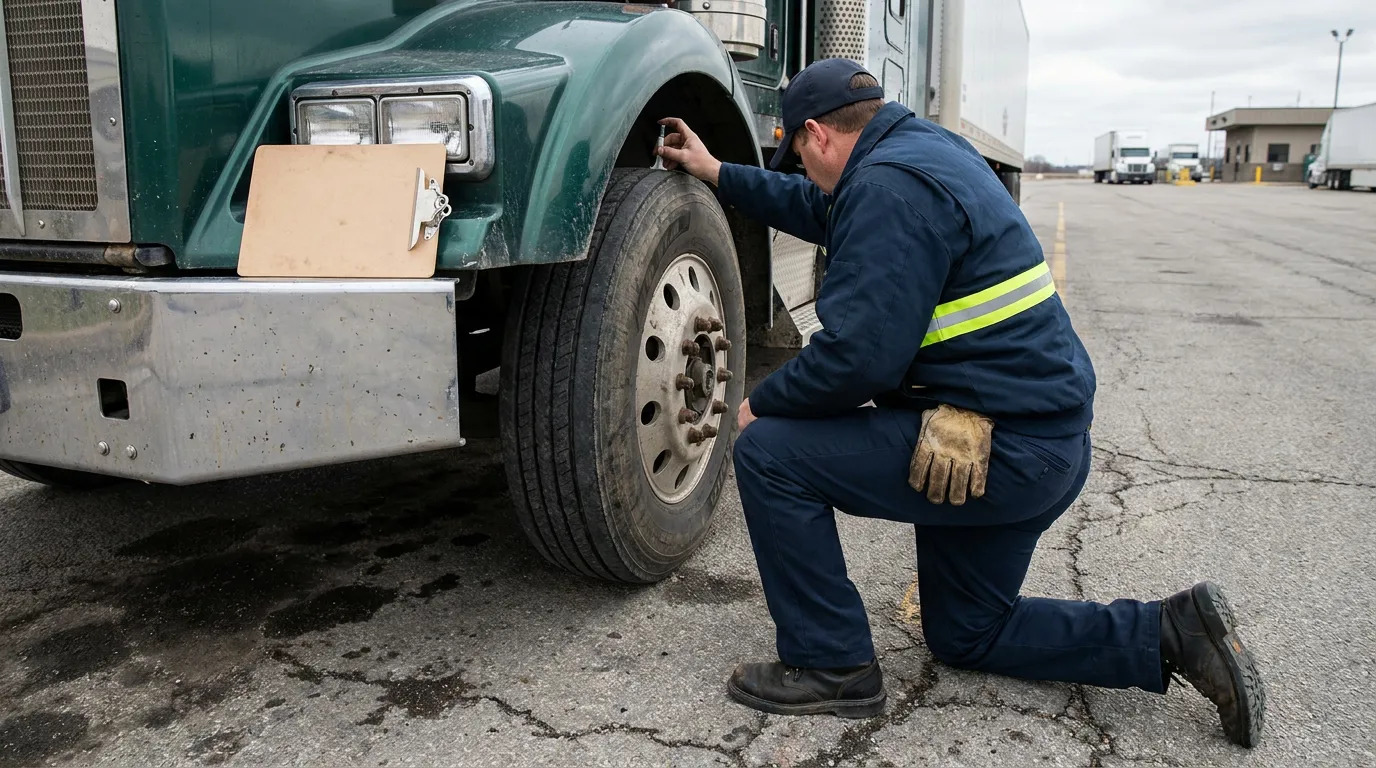
Why the Steer Axle Has a Higher Standard
Steer tires face a stricter standard because they control where the truck goes. When a front tire blows on a fully loaded rig, which can weigh up to 80,000 pounds, the driver can lose steering control almost at once. A rear tire failure is dangerous too, but a steer tire failure can send the truck across lanes or into oncoming traffic.
Safety experts often rank steer tire tread violations among the more serious tire problems found at inspections. Under the FMCSA’s Compliance, Safety, Accountability (CSA) program, which applies uniformly to carriers operating in Kansas City, Missouri as elsewhere in the U.S., tire violations count toward a carrier’s Vehicle Maintenance BASIC score, but steer tire tread depth violations (below 4/32 inch) and drive/trailer tire tread depth violations (below 2/32 inch) carry the same severity weight, so steer tire tread violations do not count more than tread violations on other tire positions.
Federal Tread Depth Minimums at a Glance
| Tire Position | Minimum Tread Depth | Source |
|---|---|---|
| Front steering axle | 4/32 inch | 49 CFR 393.75(b) |
| All other tires | 2/32 inch | 49 CFR 393.75(c) |
These numbers are legal minimums, not proof that a tire is safe. A tire right at 4/32 inch can still fail if it is underinflated, overloaded, cut, or otherwise damaged. Other parts of 49 CFR 393.75 also ban certain defects, such as exposed ply or belt material and tread or sidewall separation. Courts may look at how a carrier kept up its equipment overall, not just the tread gauge reading.
How Missouri Law Applies the FMCSA Tire Rule
Missouri makes the federal equipment rules part of state law, including for many trucks that never leave the state. Under Mo. Rev. Stat. § 307.400.1, commercial motor vehicles must be equipped and run as required by Parts 390 through 397 of Title 49 of the Code of Federal Regulations, whether the trip stays in Missouri or crosses state lines. Because Part 393 includes 49 CFR 393.75, the FMCSA tire rule generally applies to a local hauler running between Riverside and North Kansas City just as it does to a long-haul truck from Iowa. Missouri’s definition of "commercial motor vehicle," including weight limits, decides which vehicles are covered. The Missouri commercial vehicle statute also requires owners to keep every commercial vehicle, trailer, and all their parts in safe condition at all times.
Missouri’s Own Equipment Rules
Missouri also has its own tire and steering rules on top of the federal ones. Mo. Rev. Stat. § 307.170 requires vehicles on Missouri highways to have proper steering, tires, and wheels in good enough shape to pass state inspection under Mo. Rev. Stat. § 307.360. Breaking this rule is generally a minor offense. That doesn’t decide a civil case on its own, but it can help show what a careful carrier should have done.
Who Enforces These Rules on Kansas City Roads
State and local officers can enforce federal trucking rules in Missouri. Highway Patrol officers, commercial vehicle inspectors, and other authorized officers may enforce federal motor carrier safety rules against trucks in Missouri. Under Mo. Rev. Stat. § 304.230, patrol members and commercial vehicle officers may stop trucks for inspection. Officers may also take a truck with serious defects off the road, including one with steer tires below 2/32 inch, under the North American Standard Out-of-Service Criteria. A steer tire between 2/32 and 4/32 inch still breaks the rule, but it does not always get the truck pulled from service.
Limited Exceptions to the Federal Rules
Some vehicles fall outside Missouri’s adoption of the federal rules, but the exceptions are few. Under Mo. Rev. Stat. § 307.400.1, these include:
- Certain solid waste vehicles that stay in Missouri and are licensed at 60,000 pounds or less
- "F" farm-plated vehicles licensed at 42,000 pounds or less
- In either case, only if the vehicle is not carrying hazardous materials
Owners of exempt vehicles must still keep them in safe condition and still follow crash reporting rules. An exemption does not let the owner ignore a badly worn tire.
Building a Truck Tire Blowout Claim After a Crash
A strong truck tire blowout claim generally depends on proving the tire’s condition and what the carrier knew, or should have known, before the crash. Blowouts are one of the common causes of trucking accidents, and trucking companies often blame road debris or "sudden" failures. The evidence may show otherwise.
The tire itself is often the most important piece of evidence. Tread pieces, the wheel, and the other tires may show wear patterns, low air pressure, or old damage. Past roadside inspection reports that noted tire problems may help show the carrier knew about a defect and kept the truck on the road anyway. Our team also looks at maintenance logs, pre-trip and post-trip inspection reports, tire purchase records, and electronic data from the truck.
💡 Pro Tip: If you can’t photograph the truck, tire debris, and the scene yourself, ask a family member to do it. Crews often sweep tire pieces off the highway within hours.
More Than One Party May Share the Blame
Tire failure cases can involve several parties who may be at fault, and each may have its own insurance. The driver may have skipped inspections. The carrier may have put off replacing tires to save money. A repair contractor or tire shop may have installed or fixed tires poorly, and a maker may share fault for a defective tire. Finding every responsible party matters, because it can affect how much coverage is available. Under Missouri’s pure comparative fault rule, the court may also reduce any award by the injured person’s own share of fault.
Deadlines and Next Steps After a Truck Tire Blowout
In Missouri, most injury claims from a truck tire blowout must be filed within five years. That deadline comes from Mo. Rev. Stat. § 516.120(4). Wrongful death claims generally must be filed within three years under Mo. Rev. Stat. § 537.100. Exceptions are few and depend on the facts, so don’t count on more time.
Five years can sound like plenty of time, but evidence disappears much faster. Carriers may repair or sell trucks, throw away worn tires, or erase electronic data. Insurance adjusters may call early with a quick offer before anyone knows how badly you’re hurt. Talking with a truck tire blowout accident lawyer early can help get letters sent demanding that the evidence be saved.
Frequently Asked Questions
1. What is the legal steer tire tread depth for a semi truck?
Under 49 CFR 393.75(b), front steering axle tires must have at least 4/32 inch of tread. All other tires must have at least 2/32 inch under 49 CFR 393.75(c). Missouri generally applies these standards through Mo. Rev. Stat. § 307.400.1.
2. Does the federal rule apply to trucks that only drive within Missouri?
Generally, yes. Mo. Rev. Stat. § 307.400.1 applies federal equipment rules to commercial vehicles whether or not they cross state lines, with a few exceptions for certain solid waste and farm-plated vehicles.
3. Can a worn tire prove the trucking company was negligent?
A worn tire may be strong evidence, but it usually isn’t the whole case. You generally still need to show that the tire’s condition caused the crash and your injuries. Inspection histories and maintenance records often help make that link.
4. What if the trucking company says road debris caused the blowout?
Carriers often say this, and the tire itself can test the claim. An expert who studies the failed tire may be able to tell whether it failed from a sudden puncture or from wear, low air pressure, or neglect.
5. How long do I have to file a claim in Missouri?
Most injury claims must be filed within five years under Mo. Rev. Stat. § 516.120(4). Wrongful death claims generally must be filed within three years under Mo. Rev. Stat. § 537.100, so families should act quickly.
Small Measurements, Serious Results
The 4/32-inch steer tire rule is a small number that matters. Federal law sets the standard, Missouri adopts it for trucks on Kansas City roads, and state officers can enforce it. When a carrier lets a steer tire wear past that line, the results can be devastating, and the law may give injured people and grieving families a way to hold the carrier responsible. Acting early can help protect the evidence.
You deserve a team that treats you like a neighbor, not a case number. Northland Injury Law brings more than 50 years of combined attorney experience to serious truck cases, and we’ve been voted #1 Accident Lawyer and Best of the Northland. Our 30-Day Satisfaction Guarantee means you can work with us with confidence. Don’t wait. Call 816-400-4878 or reach out to our team today.
Disclaimer: This content is for informational purposes only and is not legal advice. Every case is unique, and results may vary. Consult an attorney about your specific circumstances.