
 English
Losing Your Job Does Not Automatically Erase Your Right to Benefits
Key Takeaways: Being fired does not automatically end your Missouri workers’ compensation benefits, as those benefits flow from the injury and state statute rather than employment status. Missouri is an at-will state, but Section 287.780 protects you from discharge when exercising your claim rights is the motivating factor in the firing. If you believe you were fired in retaliation, you may pursue a separate civil lawsuit for damages. Medical care and wage-replacement benefits like TTD continue based on your medical status and work restrictions. You must act within the strict two-year filing deadline (or three years if your employer failed to report the injury), and Kansas City’s bi-state location may let you choose between Missouri and Kansas jurisdictions. Consulting an attorney early can protect your rights and create a clear plan.
If you were hurt on the job and then let go, being fired does not automatically end your Missouri workers’ compensation benefits. Your right to medical care and wage replacement comes from the injury itself and state law, not from whether you’re still employed. The law ties your rights to deadlines and statutes, not employment status.
At Northland Injury Law, we talk to you, not at you. Reach our team at 816-400-4878, through our online contact form, or learn more at Ley de lesiones de Northland. We serve injured workers across the Northland, Liberty, Gladstone, St. Joseph, and Warrensburg.
Can You Be Fired While on Workers Comp in Kansas City?
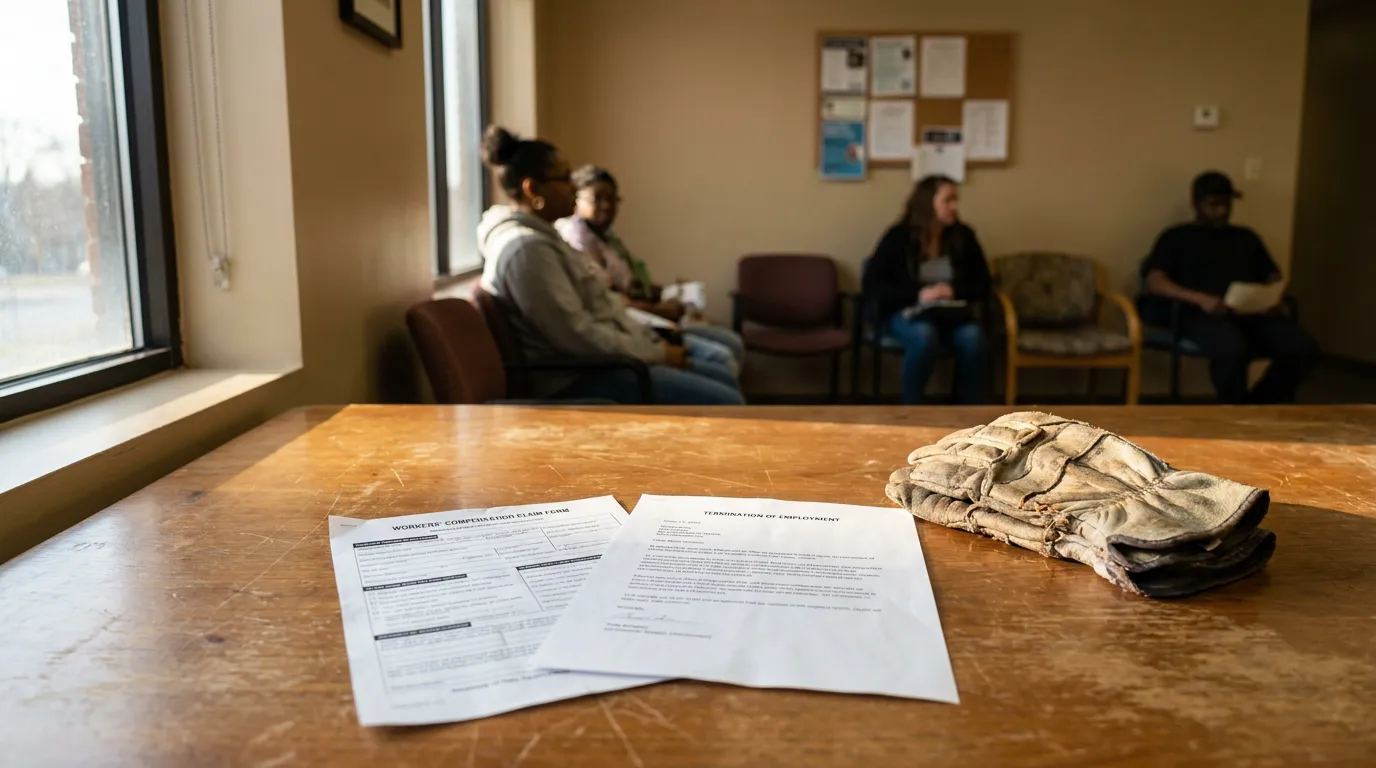
Yes, you can be fired while on workers comp, but your benefits don’t vanish with your paycheck. Missouri is an at-will employment state, so employers may end employment for many reasons. What the law limits is firing someone because they exercised their workers’ compensation rights, when that exercise was the motivating factor in the decision.
Missouri offers job protection with clear limits. Under Section 287.780, workers are protected from discharge or discrimination when exercising their compensation rights is the motivating factor. However, if after treatment you’re physically unable to perform your job, your employer isn’t required to find another position for you.
💡 Pro Tip: Keep a written timeline of your injury, reports to management, medical appointments, and termination date. If your firing and claim are close together, that record can become important evidence.
Retaliation Versus Lawful Termination
Not every firing after an injury is illegal, the difference comes down to the employer’s reason. Missouri law recognizes that an employee may be terminated for post-injury misconduct. However, post-injury misconduct doesn’t include absence due to injury unless you’re capable of working with restrictions certified by a physician.
If you believe the real reason was your claim, Missouri gives you a separate remedy. According to the Division’s guidance on workers’ compensation retaliation, you can file a civil lawsuit for money damages against your employer in circuit court. This lawsuit is separate from your benefits claim before the Division, and you must show that exercising your rights was a motivating factor. Filing suit is complex, so consult a lawyer before proceeding.
How Missouri Keeps Your Injury Claim Separate From Your Job
Workers’ compensation in Missouri is built on statute, so your benefits don’t simply follow your employment. The system is a creature of the legislature, so medical care and wage benefits depend on specific statutory provisions. Small facts can change outcomes, which is why many injured workers consult a Missouri workers comp attorney.
Filing a formal claim moves your dispute into a structured process. Filing a Claim for Compensation begins a contested case where an administrative law judge decides disputed issues. This means disagreements over benefits, including those surfacing after termination, are formally adjudicated.
💡 Pro Tip: A denied or delayed benefit isn’t the final word. Filing with the Division opens the door to a hearing where a neutral judge weighs the evidence.
Filing Deadlines That Protect Your Right to Benefits
Your deadline to act is critical, because Missouri treats it strictly. Per the state’s guidance on the limitations period for filing a claim, you generally must file within two years after the injury date, or within two years of the last payment made on account of the injury. Ongoing medical or disability payments can reset that clock.
Missouri courts view this deadline as final once it passes. There is one common extension: if the employer doesn’t file the required Report of Injury under section 287.380, you may file within three years. Courts interpret these exceptions narrowly, so don’t assume an extension applies.
Key deadlines and duties:
- Report promptly: Injured workers must ensure injuries are reported to employers in a timely manner.
- File on time: Generally two years from injury or last benefit payment, with limited exceptions.
- Employer reporting failure: The window may extend to three years if the employer never filed the Report of Injury.
💡 Pro Tip: Don’t wait for severance negotiations to finish before filing your claim. Termination talks can drag on, and the statutory clock doesn’t pause.
What Happens to Medical and Wage Benefits After a Termination
Losing your job doesn’t cut off medical and wage benefits tied to a compensable injury. These benefits flow from the accepted work injury, and their full value often can’t be measured until your condition stabilizes.
Medical Benefits and Reaching Maximum Improvement
Authorized medical treatment for a work injury continues based on the injury, not your job title. A claim’s value often can’t be fully assessed until you reach maximum medical improvement, when a physician determines your condition has plateaued. Employers or insurers may still owe medical benefits after termination when treatment relates to the accepted injury.
TTD Benefits and Wage Loss in Missouri
Wage-replacement benefits, including TTD benefits in Missouri, hinge on your medical status and work restrictions rather than continued employment. Temporary total disability applies while a doctor keeps you off work. However, if you’re terminated from post-injury employment for post-injury misconduct, TTD and temporary partial disability benefits may not be payable. A Kansas City workers comp lawyer can help you understand your options.
| Benefit Type | Generally Tied To | Effect of a Firing |
|---|---|---|
| Asistencia médica | Accepted injury and treatment need | May continue if related to the injury |
| TTD wage benefits | Doctor’s off-work status | Depends on restrictions, available work, and any post-injury misconduct |
| Permanent benefits | Rating at maximum improvement | Assessed after condition stabilizes |
When Kansas City’s Bi-State Border Changes Your Options
Kansas City’s location gives many injured workers a choice others don’t have. Workers often commute across state lines, and an employee injured on the job in the metro may pursue a claim in Missouri, Kansas, or both jurisdictions, depending on where the injury occurred, where the employment contract was made, and where work was performed.
Choosing between jurisdictions is complex and can affect your case’s value. An employee often can’t tell which jurisdiction will result in more compensation until after reaching maximum medical improvement. If you commute across state lines, review whether you can be fired while on workers comp under either state’s rules and which forum better protects your Kansas City injured worker rights.
💡 Pro Tip: If you live in the Northland but work across the state line, save pay stubs and employment records. Where you were hired and worked can matter when deciding where to file.
Preguntas frecuentes
-
Can you be fired while on workers comp and still get benefits in Missouri?
Generally, yes. Termination doesn’t automatically end benefits connected to a compensable injury. Whether specific benefits continue depends on your medical status, case facts, and whether termination was based on post-injury misconduct.
-
Is my employer required to hold my job open?
Not in every case. Section 287.780 protects you from retaliation when exercising your rights is the motivating factor, but doesn’t guarantee your job if you can’t physically perform the work after treatment or require the employer to create a new position.
-
What if I think I was fired for filing a claim?
You may have a separate civil remedy. Missouri allows discharged workers to file a civil lawsuit for money damages in circuit court when exercising rights was a motivating factor in the discharge. This is distinct from the benefits claim before the Division and requires legal consultation.
-
How long do I have to file after a termination?
Generally two years from the injury or last benefit payment. Missouri’s deadline under RSMo Section 287.430 is final once it passes, though limited exceptions, such as an employer’s failure to report, may extend it.
-
Should I talk to a lawyer before I do anything?
It often helps. Because these cases turn on specific facts and strict deadlines, professional guidance can protect your rights. Read more about being fired while on workers comp in Missouri in our related discussion.
Moving From Worry to a Plan
Getting fired after a work injury feels overwhelming, but it doesn’t mean the end of your claim. Missouri’s statutory system keeps your right to medical care and wage benefits tied to your injury and firm deadlines, not job status. With over 50 years of combined attorney experience and a track record recovering millions for injured people across the region, our team helps you understand where you stand and what steps make sense next.
You don’t have to sort this out alone. Reach out to Ley de lesiones de Northland today, call us at 816-400-4878, or start your case review through our confidential contact page. Backed by our 30-Day Satisfaction Guarantee, we’re ready to listen, keep you informed, and help you move from anxiety to a clear plan.