
 Spanish
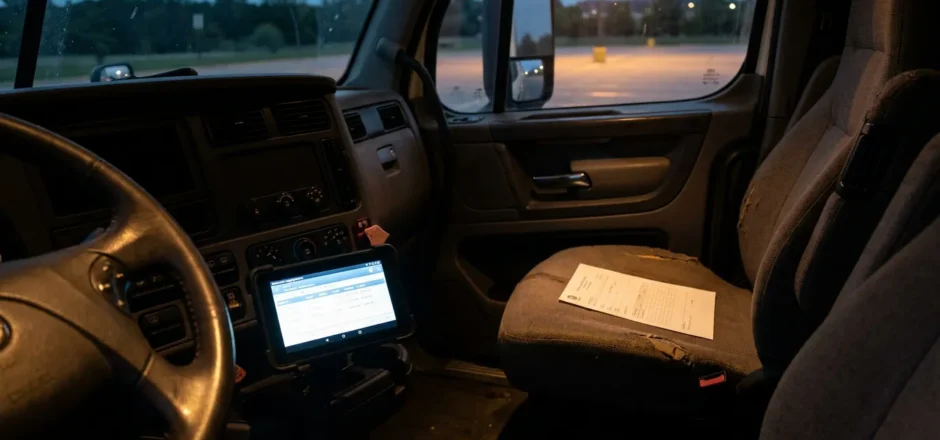
What a Truck’s Electronic Logbook Can Tell Us After a Kansas City Crash
Key Takeaways: An electronic logging device (ELD) can help reveal five key things about the truck driver who hit you: hours of service violations, signs of fatigue, the truck’s movement before impact (especially when paired with engine and telematics data), driving during an out-of-service order, and what the trucking company knew. Federal rules generally require interstate truck drivers who must keep records of duty status to use ELDs, and Missouri has adopted the federal safety rules for most heavy commercial trucks, with limited exceptions. ELDs create time-stamped records that are harder to change than paper logs, so they can be strong evidence of negligence. Under Missouri’s pure comparative fault system, this data can also help you push back if the trucking company tries to blame you. Carriers generally only have to keep hours-of-service records and supporting documents for six months, and the truck’s systems may overwrite telematics data sooner. An attorney can send preservation demands quickly and seek records that trucking companies often won’t hand over to injured people.
An electronic logging device (ELD) can tell us a lot about the truck driver who hit you. It may show how long the driver had been behind the wheel, whether they skipped required rest, how the truck was moving, and whether the driver should have been on the road at all. If a crash with a semi on I-29, I-35, or I-435 through the Northland left you or someone you love seriously hurt, you may be facing hospital stays, lost paychecks, and an insurance company with a team already working for it. We want you to know what ELD data can show and why it needs to be protected quickly.
You do not have to figure this out alone. At Northland Injury Law, our team has more than 50 years of combined attorney experience. We talk with you, not at you, and we keep you informed at every step. Call us at 816-400-4878 or contact us now for a free consultation so we can start protecting the evidence in your case.

Why ELD Records Matter in Missouri Truck Crash Cases
Federal Motor Carrier Safety Administration (FMCSA) rules generally require interstate truck drivers who must keep records of duty status to use ELDs. These devices automatically record the date, time, engine hours, vehicle miles, and approximate location at duty-status changes and set intervals. Drivers could fill in paper logs after the fact. With an ELD, anyone who edits a record must add a note, and the original stays intact. That makes it one of the more objective sources of evidence after a crash.
Missouri has adopted the federal motor carrier safety rules in 49 CFR Parts 390 through 397 for many commercial vehicles operating in the state. There are limited exceptions. Under RSMo § 307.400.5, those rules generally do not apply to trucks hauling property only within Missouri if the gross vehicle or combination weight rating is 26,000 pounds or less. The exception does not cover trucks carrying placard-level hazardous materials or vehicles built to carry 16 or more passengers including the driver. Other narrow exemptions, such as some farm operations, may also apply. Still, the federal rules, including hours of service, generally cover most heavy tractor-trailers moving through Kansas City.
Missouri’s enforcement system follows those same federal rules. Under RSMo § 304.232, agencies that enforce commercial vehicle laws must follow the federal Motor Carrier Safety Assistance Program requirements in 49 CFR Part 350. We may be able to request a truck’s inspection and violation history along with the ELD data.
5 Things ELD Data Can Reveal After a Truck Crash
Every crash is different, but ELD records often answer the questions that matter most in a truck accident claim. Here are five things the data may show.
1. Hours of Service Violations
Federal hours of service rules limit how long a commercial driver may drive and stay on duty. For property-carrying drivers, the rules generally allow up to 11 hours of driving within a 14-hour window after 10 straight hours off duty. They also require a 30-minute break after 8 total hours of driving, and they bar driving after 60 hours on duty in 7 days or 70 hours in 8 days. ELD data can show whether a driver went over these limits.
2. Signs of Truck Driver Fatigue
Fatigue is a common factor in serious truck crashes, and it often doesn’t show up in a police report. Drivers seldom admit they were drowsy, but the ELD timeline may show it. Long stretches without rest, short breaks, or driving through the night can support an argument that fatigue played a role.
3. Speed, Braking, and Movement Before Impact
ELDs record vehicle movement and approximate location, and they often work alongside the truck’s engine control module and telematics systems. Together these sources may show the truck’s speed, hard braking, and position in the seconds before the crash. Missouri follows a pure comparative fault system, which the Missouri Supreme Court adopted in Gustafson v. Benda (1983). Courts generally reduce damages by each party’s percentage of fault, so objective data can matter a great deal. If the trucking company tries to blame you, the data may prove otherwise.
4. Driving During an Out-of-Service Order
A driver under an out-of-service order may not legally drive until the order ends or the problem is fixed. Under RSMo § 302.756, a driver who violates an out-of-service order may face penalties, including disqualification. If ELD records show the truck was moving during that period, it can be strong evidence of unlawful driving. That may support a negligence per se claim (meaning the law violation itself shows negligence), but you still have to show the violation caused the crash and injuries.
5. What the Trucking Company Knew
ELD data does more than show what the driver did. It can also expose problems at the company level. Under RSMo § 302.710, a commercial driver who is suspended, revoked, disqualified, or placed out of service must generally tell their employer by the end of the next business day after getting notice. RSMo § 302.756 also penalizes employers that knowingly require, permit, or allow a driver to violate an out-of-service order. If the logs show a pattern of violations, they may help show that the carrier knew or should have known. That can support claims against the motor carrier and possibly others, such as brokers or repair contractors.
| What ELD Data May Show | Why It Can Matter in Your Claim |
|---|---|
| Hours driven and on duty | Possible hours of service violations |
| Rest periods and breaks | Evidence of driver fatigue |
| Speed and movement | How the crash happened and who was at fault |
| Driving while out of service | Unlawful driving under RSMo § 302.756 |
| Patterns across many trips | What the carrier knew and company-level negligence |
Why You Need to Act Fast to Save Evidence
Carriers don’t keep ELD records forever. Federal rules generally require carriers to keep hours-of-service records and supporting documents for six months, and the truck’s systems may overwrite telematics and engine data even sooner. If a carrier destroys this evidence after notice of a claim, a court may punish it. In Missouri, though, a jury generally may only assume the lost evidence would have hurt the carrier if you prove it was destroyed on purpose or in bad faith. That’s why it’s better to stop the loss before it happens.
A legal team can take several steps early in a case:
- Send a preservation letter asking the carrier to keep ELD, telematics, and dispatch records
- Request the inspection and violation history for the truck and driver
- Get driver qualification files, maintenance records, and drug and alcohol test results
- Hire crash reconstruction experts to study the data
Our guide on what evidence a KC truck crash attorney should preserve explains these steps in more detail. Protecting evidence early may make a real difference in what your case is worth.
💡 Pro Tip: If you or a family member can safely do so, write down the truck’s company name, USDOT number, and trailer number, or ask someone to photograph the truck. These details help us identify the carrier quickly.
Common Challenges When Using ELD Data
Getting ELD data is often harder than people expect. Trucking companies and their insurers may delay, hand over incomplete records, or argue that they don’t have to share certain data. Some drivers may also be exempt from the ELD rule, such as some short-haul drivers, drivers who keep logs 8 or fewer days in a 30-day period, and drivers of trucks with engines older than model year 2000. Those cases may depend on paper logs and other records.
Reading the data correctly also takes experience. Raw ELD files are full of codes, timestamps, and duty-status changes, and we have to match them against GPS records, fuel receipts, and delivery schedules. Our team has handled serious cases involving catastrophic injuries and wrongful death, and we know how to turn these records into a clear account that a jury or insurer can follow.
When a Loved One Was Killed
If a truck crash took the life of someone you love, Missouri’s wrongful death statute, RSMo § 537.080, may allow certain family members to bring a claim. These claims generally must be filed within three years of the death. ELD records can matter just as much in these cases, because the person who could have explained what happened is gone.
Frequently Asked Questions
1. Can I get the truck driver’s ELD data myself?
In most cases, the trucking company controls the ELD data and may refuse to give it to an injured person. An attorney can send a formal preservation demand and, if you file a lawsuit, request the records through discovery.
2. How long do trucking companies keep ELD records?
Federal rules generally require carriers to keep hours-of-service records and supporting documents for six months. The truck’s systems may overwrite some telematics data sooner, so acting quickly matters.
3. What if I was partly at fault for the crash?
Under Missouri’s pure comparative fault system, you may still recover damages, reduced by your percentage of fault. ELD data can help show that the truck driver’s share of fault is larger than the insurer claims.
4. Do all trucks in Missouri have to follow hours of service rules?
Not all. Under RSMo § 307.400.5, some smaller trucks rated at 26,000 pounds or less that haul property only within Missouri are exempt. That exemption doesn’t apply to trucks carrying placard-level hazardous materials or vehicles built for 16 or more passengers. The rules generally still cover most large tractor-trailers on Kansas City highways.
5. Can ELD data prove the trucking company was negligent too?
It may. A pattern of violations, or evidence that the company let a driver keep working during an out-of-service order, can support claims against the carrier under Missouri law, depending on the facts.
Protecting Your Family’s Future After a Truck Crash
ELD data, especially when combined with engine and telematics records, can show hours of service violations, signs of fatigue, speed and braking, driving during an out-of-service order, and what the trucking company knew. This evidence can help prove negligence, counter unfair blame, and support a claim for full compensation instead of a quick, low settlement. Working with an experienced ELD data truck accident evidence lawyer can help make sure nothing important is lost.
We are your neighbors here in the Northland, and we treat our clients like people, not case numbers. Northland Injury Law offers a 30-Day Satisfaction Guarantee, so you can move forward with confidence. Call 816-400-4878 or schedule your free case review today, and let our team start protecting the evidence in your case.
Disclaimer: This content is for informational purposes only and is not legal advice. Every case is unique, and results may vary. Consult an attorney about your specific circumstances.