
 Spanish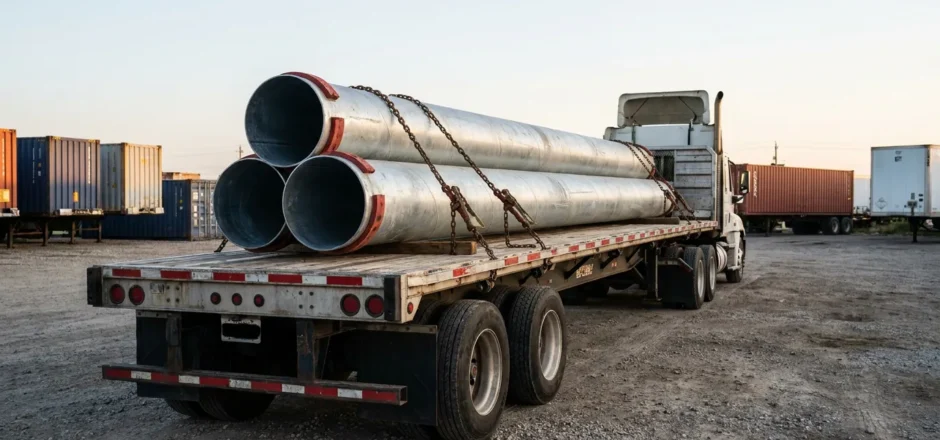
When a Truck’s Load Shifts, Federal Law Has Something to Say About It
Key Takeaways: A cargo securement violation may occur when a commercial truck’s load is not contained, immobilized, or secured as 49 CFR Part 393, Subpart I requires, creating a risk that cargo shifts, falls, or destabilizes the vehicle. Federal rules set measurable standards, including minimum tiedown counts and an aggregate working load limit of generally at least half the weight of the cargo the tiedowns restrain, plus commodity-specific requirements for items like logs, metal coils, pipe, and vehicles. These standards generally apply to enclosed box trucks and dry vans just as much as flatbeds, so a load that shifts inside a sealed trailer may still involve a securement failure. Proving such a claim often means reconstructing the load through bills of lading, weight tickets, dispatch records, inspection reports, and the physical tiedowns themselves, much of which can disappear quickly. Liability may extend beyond the driver to the carrier, shipper, loading contractor, broker, or maintenance provider, which can potentially open multiple insurance policies. A violation may be persuasive evidence of breach but does not automatically decide a Missouri case, where duty, causation, damages, and pure comparative fault still apply.
A cargo securement violation generally happens when a commercial truck’s load isn’t firmly immobilized as federal regulations require, creating a risk that cargo shifts, falls, or destabilizes the truck. The FMCSA sets these standards in 49 CFR Part 393, Subpart I, enforced through roadside inspections that can put a vehicle out of service on the spot. If you were hurt on I-35 near Liberty, on Highway 152, or anywhere in the Northland by a truck carrying steel, lumber, pipe, or pallets that weren’t properly tied down, that violation may be important evidence in your case.
Our team at Northland Injury Law has spent years untangling exactly this kind of case for families across Clay, Platte, and Ray Counties. We know how intimidating it feels to go up against a trucking company and its insurer while you’re still trying to heal. Call us at 816-400-4878 or contact us now to talk with a real person who will explain your options in plain language.
The Federal Rule Behind Every Load on the Highway
The baseline requirement is straightforward, even if the details are not. Under 49 CFR 393.100, cargo on a commercial motor vehicle must be contained, immobilized, or secured so it does not leak, spill, blow off, fall from, or otherwise become dislodged, and so the vehicle’s stability and maneuverability aren’t affected. The FMCSA’s cargo securement rules explain that cargo must be firmly immobilized by structures of adequate strength, dunnage, tiedowns, or some combination.
That performance standard is what can turn a shifted load into a regulatory violation. It’s not enough for a carrier to say the load "looked fine" when it left the dock. If the securement system wasn’t strong enough to keep the cargo in place through normal driving, braking, and turning, it may have failed to meet the standard, subject to the facts and any applicable exemptions.
Tiedown Requirements Are Numbers, Not Guesswork
Federal rules set minimum tiedown counts and strength thresholds based on the cargo’s length and weight. Under 49 CFR 393.106 and 393.110, the minimum number of tiedowns generally depends on the article’s length and weight, and their aggregate working load limit must generally be at least one-half the weight of the cargo they secure. When a carrier uses two straps where four are required, that may be a measurable, documentable failure, though the required count can differ for cargo that’s blocked, braced, or secured by a commodity-specific method.
In our experience, insufficient tiedowns are one of the most common securement problems in serious crash cases. Straps and chains have rated capacities marked on them or determinable from regulatory tables. Comparing what was used against what was required is often simple arithmetic, and that clarity can be powerful in negotiations or at trial.
Commodity-Specific Rules Add Another Layer
Certain cargo types carry their own detailed securement requirements beyond the general rule. Sections 49 CFR 393.116 through 393.136 address logs, dressed lumber, metal coils, paper rolls, concrete pipe, intermodal containers, automobiles, heavy machinery, crushed vehicles, roll-on/roll-off containers, and large boulders. Where a commodity-specific rule applies, it controls, so a load of metal coils secured as ordinary freight may still violate the rules even if the general tiedown math checks out.
The full text of Subpart I on protection against shifting cargo spells out each commodity category. These rules generally apply to interstate carriers, and Missouri has adopted comparable standards for many intrastate operations, so a truck rolling through Liberty toward Kansas City is generally held to the same standard as one anywhere else.
Enclosed Trailers and Box Trucks Are Not Exempt
One of the biggest misconceptions is that securement rules only apply to flatbeds. FMCSA guidance indicates Subpart I requirements generally apply whether the cargo compartment is open or enclosed. A box truck on Kansas Street or a dry van on I-435 must still have its freight properly restrained.
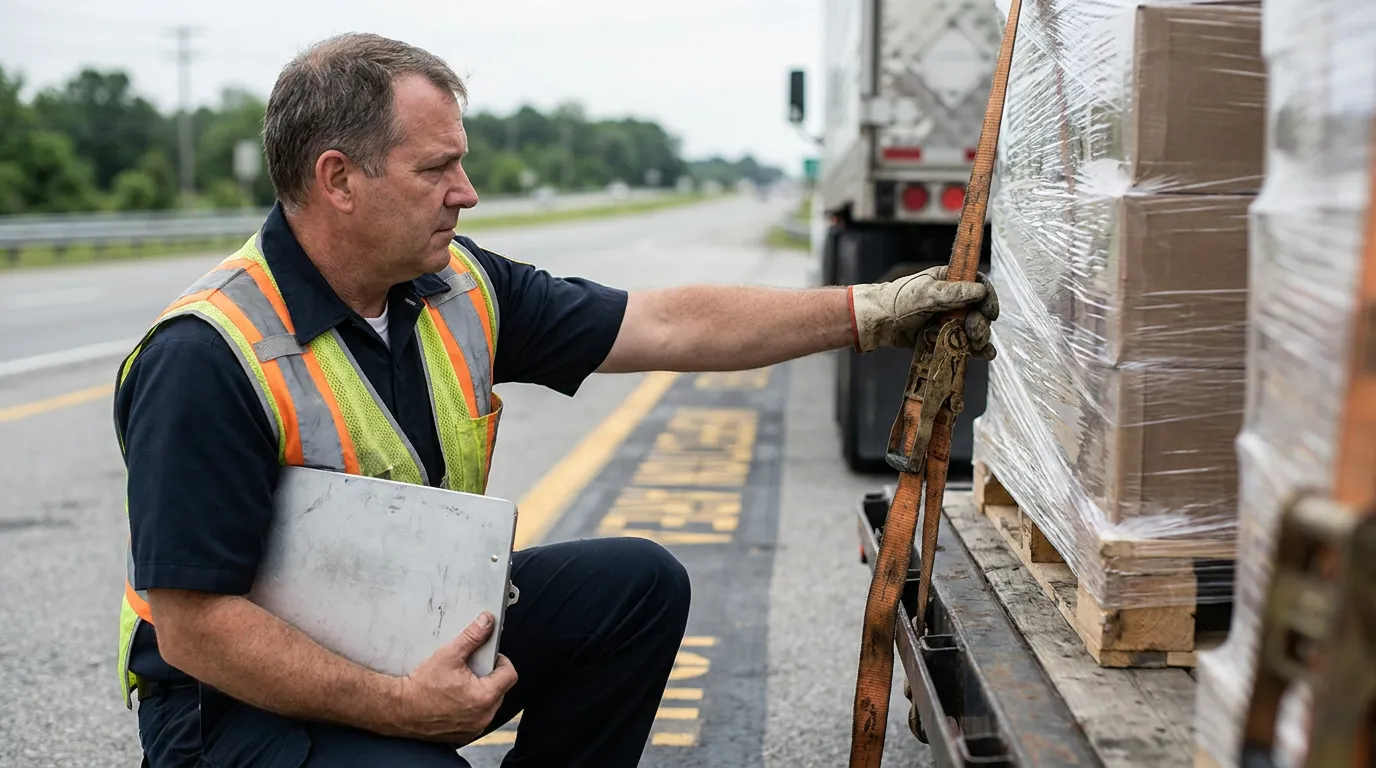
Drivers also generally remain responsible for load distribution and securement even when they can’t see the cargo while driving. Under 49 CFR 392.9, a driver generally may not operate a commercial vehicle unless the cargo is properly distributed and secured, and must inspect the load and securement devices before driving and, where practicable, during the trip. That duty attaches through proper loading and inspection rather than constant visual confirmation, with a limited exception for sealed loads drivers are ordered not to open. Unsecured cargo inside an enclosed trailer can shift weight suddenly and affect stability, precisely what the regulation prevents.
| Common Securement Failure | Typical Regulatory Hook |
|---|---|
| Too few straps or chains for the load’s length and weight | 49 CFR 393.106, 393.110 |
| Cargo not immobilized against forward or lateral movement | 49 CFR 393.100 |
| Worn, cut, or damaged tiedowns still in service | 49 CFR Part 393, Subpart I general requirements |
| Metal coils, logs, or vehicles secured by general method only | 49 CFR 393.116 through 393.136 |
| Load shifting inside an enclosed van or box truck | Subpart I, applicable regardless of enclosure |
💡 Pro Tip: Photographs of the crash scene showing straps, chains, binders, and where the cargo ended up can be valuable evidence. If you can’t take them yourself, ask someone you trust to do it.
How Cargo Securement Violation Claims Get Proven
Building a securement case usually means reconstructing the load, not just the collision. Bills of lading, weight tickets, loading dock records, dispatch communications, driver vehicle inspection reports, and prior roadside inspection history can all reveal whether the carrier followed FMCSA standards. Because much of that material sits in the carrier’s control, moving quickly matters.
Roadside inspection records deserve particular attention. Securement compliance is enforced through the North American Standard Inspection Program, and load securement violations are commonly cited during those inspections. The Commercial Vehicle Safety Alliance works with FMCSA to interpret these standards, including questions about equivalent means of securement when a carrier claims an alternative method satisfied the rule.
A regulatory violation does not automatically decide a Missouri injury case. You generally still must prove duty, breach, causation, and damages, and Missouri applies pure comparative fault in most negligence actions, meaning a defense lawyer may argue your own conduct contributed. That said, a documented violation can be evidence relevant to the standard of care, and how much weight it carries depends on the facts and the court’s rulings on admissibility.
Evidence That Tends to Disappear Fast
Securement evidence is physical and perishable in a way other crash evidence often isn’t. Straps may be cut by first responders, spilled cargo gets cleared to reopen roadways, and trucks may go back into service within days. Understanding what evidence a truck crash attorney should preserve explains why a prompt preservation letter to the carrier matters.
Items worth preserving early generally include:
- The tiedowns, chains, binders, edge protectors, and dunnage actually used
- ELD and engine control module data showing speed, braking, and sudden movement
- The bill of lading, load plan, and any photos taken at the shipper’s dock
- Maintenance and inspection records for the trailer and its securement anchor points
- Names and contact information for anyone who helped load or inspect the freight
💡 Pro Tip: If an insurance adjuster calls within days offering a quick check, it’s generally reasonable to slow down. Securement investigations can reveal more liability than the first phone call suggests.
Who May Be Responsible When Cargo Comes Loose
Liability in a securement case is rarely limited to the driver. Depending on the facts, the motor carrier, the shipper who loaded the trailer, a third-party loading contractor, a freight broker, or a maintenance provider may share responsibility, though each party’s exposure depends on its own duties, role in loading, and any contractual or preemption defenses. Carriers often argue the shipper loaded it, and shippers often point back at the carrier, which is why identifying every potentially liable party early tends to matter.
Multiple defendants can also mean multiple insurance policies, affecting the realistic value of a claim. Commercial trucking policies frequently carry limits far above private auto coverage. Our team pursues full available coverage rather than accepting the first offer, and we have recovered results in the $1.5 million to $2 million and above range for clients facing catastrophic injuries and wrongful death losses. Past results do not guarantee similar outcomes in any particular case.
Working With a Liberty Truck Crash Lawyer Who Knows These Rules
Federal regulations are a tool, not a magic wand, and they take real work to apply. With more than 50 years of combined attorney experience and recognition as a Voted #1 Accident Lawyer and Best of the Northland firm, our team is respected for handling serious commercial vehicle cases throughout the Northland. If you’re looking for a cargo securement violations truck accident lawyer, you deserve someone who will read the load paperwork line by line.
We also believe you should never have to wonder what’s happening with your own case. Clients tell us we talk to them, not at them, and that’s the standard we hold ourselves to. Our 30-Day Satisfaction Guarantee exists because we think you should feel confident in your choice, and Eric Bartlett’s long involvement in Northland community organizations reflects that we live here too.
Frequently Asked Questions
1. Does a cargo securement violation automatically mean the trucking company is liable?
No, a citation alone does not resolve a civil claim. A violation of 49 CFR Part 393 may be evidence relevant to negligence, but you generally still must prove the violation caused your injuries and document your damages. Outcomes depend heavily on the specific facts.
2. What if the cargo never actually fell off the truck?
Cargo doesn’t have to leave the trailer for a securement problem to exist. Because the rules generally apply to enclosed and open cargo areas alike, and because 393.100 also addresses cargo that adversely affects stability or maneuverability, a load that shifted inside a van and caused a rollover may still involve a securement failure.
3. How soon should I contact a lawyer after a truck crash in Missouri?
Sooner is generally better, because securement evidence degrades quickly. Many Missouri personal injury claims are subject to a five-year limitations period under RSMo § 516.120, and wrongful death claims generally must be filed within three years under RSMo § 537.100. Different or shorter deadlines can apply, so no deadline should be assumed without checking with a lawyer.
4. Who investigates whether tiedown requirements were met?
FMCSA and state enforcement partners generally handle regulatory inspections, which are separate from any civil lawsuit you file. An administrative citation or out-of-service order doesn’t substitute for a personal injury claim, and findings in an enforcement proceeding aren’t automatically binding in civil court. Our team conducts an independent investigation for your case.
5. Can I bring a claim if I was partly at fault?
Possibly, yes. Missouri follows pure comparative fault in most negligence cases, so a claimant’s recovery may be reduced in proportion to assigned fault rather than barred outright. How fault gets apportioned is fact-dependent and often contested.
Getting Clear Answers About Your Load Securement Case
Cargo securement violation claims sit at the intersection of federal regulation and Missouri injury law. The rules in 49 CFR Part 393, Subpart I set measurable standards for tiedowns, commodity-specific methods, and the basic duty to immobilize a load, and those standards generally apply to commercial trucks moving through Liberty regardless of whether the trailer is open or enclosed. Proving one of these cases takes prompt evidence preservation, careful reading of load documents, and a willingness to hold every responsible party accountable rather than settling for the easiest offer.
You do not have to figure any of this out alone, and reaching out costs you nothing but a conversation. The team at Northland Injury Law is ready to listen, answer your questions honestly, and tell you what we think is realistic. Call 816-400-4878 or request your free consultation today, and let us take the weight of the investigation off your shoulders.
Disclaimer: This content is for informational purposes only and is not legal advice. Every case is unique, and results may vary. Consult an attorney about your specific circumstances.