
 Spanish
When Your Weekly Work Comp Check Suddenly Stops in Missouri
Key Takeaways: If your temporary total disability checks stop in Missouri, you can request an expedited hardship hearing under § 287.203, RSMo, which requires employers to notify you when benefits are terminated. TTD typically ends after a light-duty release or maximum medical improvement finding, both of which may be challenged when medical evidence conflicts with your condition. To request a hearing, confirm a Claim for Compensation (Form WC-21-A) is filed, gather cutoff proof, obtain supporting medical opinions, file a written hearing request, and prepare to testify. Medical records and expert opinions drive outcomes. Related benefits include temporary partial disability under § 287.180 and permanent total disability under § 287.200. Missouri’s statute of limitations generally runs two years from injury or last payment under § 287.430, RSMo.
If your temporary total disability payments stopped without warning, Missouri law provides a path to request an expedited hardship hearing under § 287.203, RSMo. The process starts with filing a claim with the Division of Workers’ Compensation and a written hearing request identifying the benefits cut off and why they remain owed. Outcomes depend on medical evidence and case-specific facts.
At Northland Injury Law, we guide Kansas City workers through this process in plain language. Call us at 816-400-4878 or reach out to our team today. We also stand behind our work with a 30-Day Satisfaction Guarantee, because Northland Injury Law believes trust is earned early.
Why TTD Benefits Stop in the First Place
Temporary total disability is wage replacement tied to your doctor’s opinion about work ability. Under § 287.170, RSMo, benefits are payable while injury prevents work, capped at 400 weeks per injury. When medical opinions change, benefits often follow.
Light-duty releases are common triggers. If your treating physician releases you to modified duty and your employer offers work within those restrictions, TTD may end. Disputes arise over whether offered jobs truly fit restrictions, exist beyond paper, or whether releases were accurate.
Benefits also end at maximum medical improvement. Missouri courts describe TTD as payable until you can return to work or your condition reaches MMI, meaning further treatment won’t reasonably improve it. Premature MMI findings frequently cause benefit termination while workers in Liberty, Gladstone, and across the Northland still experience pain.
Understanding the Missouri 287.203 Hardship Hearing
A hardship hearing resolves specific, urgent disputes rather than waiting for a full final hearing. Section 287.203, RSMo requires employers or insurers terminating temporary benefits to notify employees and explain why, allowing employees to request hearings. These hearings focus narrowly on whether temporary benefits and medical treatment should resume. The judge’s temporary award isn’t a final ruling on all case issues.
Filing a claim opens the courthouse door. Filing the Claim for Compensation begins a contested case where an administrative law judge can decide disputed issues. This forum handles hardship award requests.
What Judges Typically Look At
Medical evidence drives results. Judges weigh treating physician records against independent medical opinions and your testimony about capabilities. Vocational testimony matters when disputes involve whether light-duty positions are genuinely available.
Expert opinions must tie carefully to statutes. Missouri appellate law shows framing expert proof matters significantly. Cases like Klecka v. Treasurer of Missouri, 644 S.W.3d 562 (Mo. banc 2022), and Greer v. SYSCO Food Services, 475 S.W.3d 655 (Mo. banc 2015), illustrate how expert opinions must align with statutory requirements, though these address permanent rather than temporary disability standards.
How to Request a Hardship Hearing in Missouri, Step by Step
The sequence matters. Missouri work comp procedure is administrative, separate from civil court. Follow this path:
- Confirm a Claim for Compensation (Form WC-21-A) is filed with the Division. Complete the form and mail it to the printed address or pick one up at any Division office. Find forms through the Division’s guidance on how to file a work comp claim.
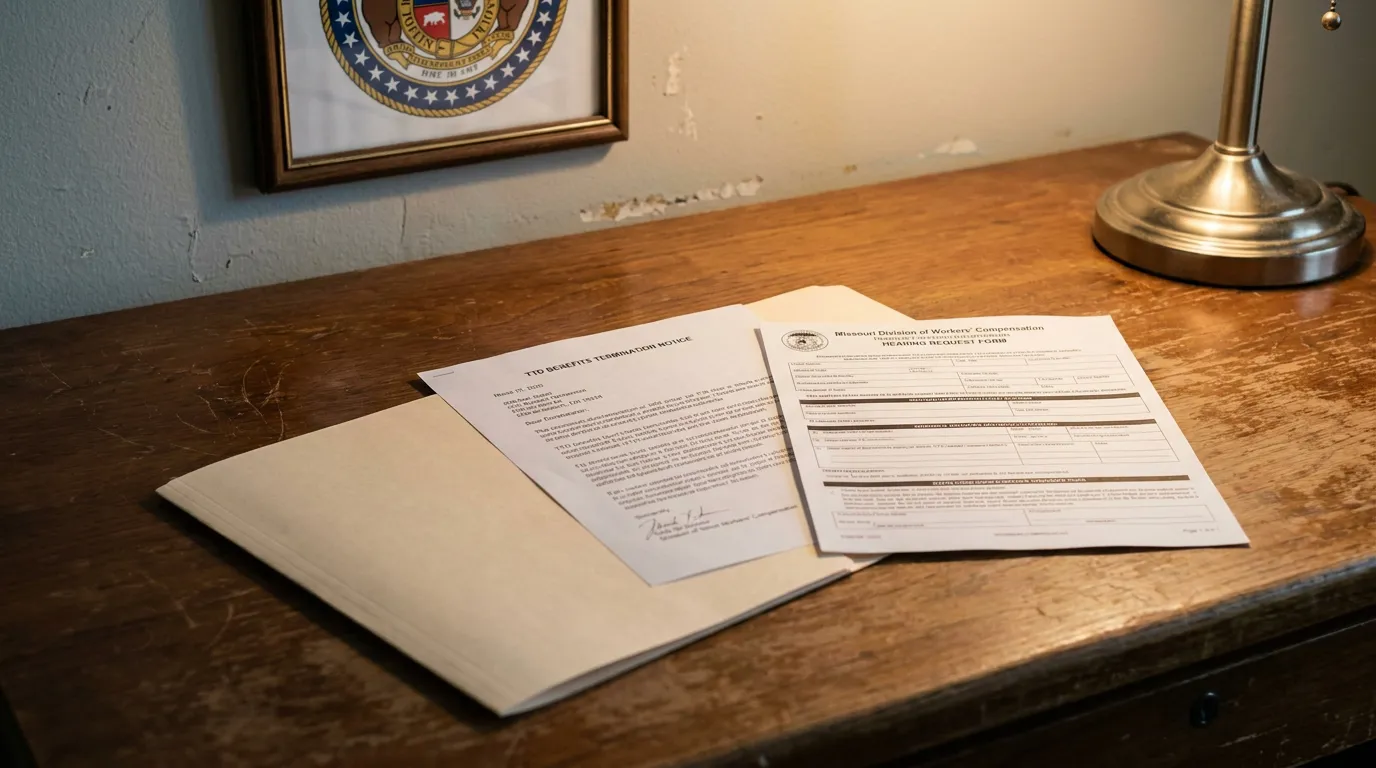
- Gather cutoff proof: last check stub, benefit termination notices, and medical records the insurer relied on.
- Obtain supporting medical opinions addressing work status and treatment needs.
- File a written hearing request identifying temporary benefits at issue and relief sought.
- Prepare to testify about restrictions, pain, and what your employer offered.
Documentation carries weight over argument. Save every adjuster message, appointment note, and supervisor text about light duty. A Kansas City workers comp attorney can organize records effectively.
💡 Pro Tip: Record the date your last TTD check arrived. That date affects hearing requests and filing deadlines.
Related Benefits Worth Raising When Benefits Are Cut Off
TTD isn’t the only wage benefit. If you returned to light duty at reduced pay, temporary partial disability may apply. Under § 287.180, RSMo, TPD pays weekly at 66 2/3% of the difference between pre-injury earnings and post-injury earnings, capped at the TTD rate with a general 100-week limit.
| Benefit | General Basis | Common Trigger |
|---|---|---|
| TTD (§ 287.170) | Full weekly rate while off work | Doctor says you cannot work |
| TPD (§ 287.180) | 66 2/3% of wage difference, capped at TTD rate | Light duty at lower pay |
| PTD (§ 287.200) | Weekly for life, based on average weekly earnings | Unable to compete in open labor market |
Permanent total disability is often a larger question. PTD benefits under § 287.200, RSMo are paid weekly for life, calculated from average weekly earnings. Liability may rest with the employer or, narrowly, with the Second Injury Fund under § 287.220.3, RSMo for post-2014 injuries. The Missouri Bar’s analysis of permanent total disability benefits explains why more disputes now proceed against employers directly.
When Medical Care Is Denied Too
Stopped checks and denied treatment often arrive together. Under § 287.140, RSMo, employers or insurers generally select treating providers, and self-obtained care is typically at your expense. An exception applies when employers refuse necessary treatment, allowing judges to order reimbursement. Bring denial letters when seeking care and raise denials in hearing requests.
Denials aren’t necessarily final. Many workers assume denial letters close files. If your claim was rejected outright, our discussion of options after a work comp denial covers next steps.
Deadlines That Quietly Run in the Background
Missouri’s workers’ compensation statute of limitations is generally two years from injury date or last payment, whichever is later, under § 287.430, RSMo. The date TTD payments stopped may start the clock. The period extends to three years if employers failed to file required Reports of Injury, but courts interpret this strictly.
Administrative comp deadlines differ from civil court deadlines. Don’t assume personal injury lawsuit rules apply. Workers must give employers written notice within 30 days under § 287.420, RSMo. Missouri applies a three-day waiting period before lost-time compensation begins, compensated if disability exceeds fourteen days.
What Happens After the Hearing
Hardship awards don’t end your case. They address temporary benefits, while claims continue toward settlement or final hearings deciding permanent disability. The Division decides disputed claims through final hearings, with review available to the Labor and Industrial Relations Commission and Missouri Court of Appeals.
Preparation starts early. Evidence developed for hardship hearings carries forward.
💡 Pro Tip: The Division maintains a toll-free line at 800-775-2667 for filing questions, but specialists cannot provide legal counsel or settlement advice.
Frequently Asked Questions
1. How quickly can I get a hardship hearing after my TTD benefits stopped?
Timing varies by docket and assignment. Requests under § 287.203, RSMo are handled faster than final hearings, but no specific date can be promised.
2. Do I need a claim on file before filing a hardship hearing request?
Yes. Filing the Claim for Compensation opens the contested case where judges decide disputes, so hearing requests normally follow or accompany claims.
3. What if my employer offered light duty I cannot physically do?
Raise it directly. Whether offered positions fit medical restrictions is a fact question, and physician documentation about limitations is significant evidence.
4. Can I get treatment while my case is disputed?
Possibly. Because employers or insurers control provider selection under § 287.140, RSMo, ordering treatment is frequently a hardship hearing issue.
5. Is workers’ compensation my only option against my employer?
In most situations, yes. Missouri workers’ compensation is the exclusive remedy for accidental work injuries under § 287.120, RSMo, with limited exceptions. Claims against negligent third parties may exist separately.
Getting Your Benefits Moving Again
When benefits stop, effective routes back include a filed claim, clear written hearing request, and medical evidence addressing work status. Missouri’s system offers real tools, TTD, TPD, and permanent disability benefits, but they work best with representation. Every case turns on its own facts, and no result is guaranteed.
Our team has 50+ years of combined attorney experience, has recovered millions for injured people across the Northland, and was named a Silver Winner for Best Workers’ Compensation Law in The Kansas City Star’s 2026 KC Favorites, along with Best Law Firm honors from Kansas City Magazine. Don’t wait. Call 816-400-4878, schedule your free consultation now, or visit Northland Injury Law in Kansas City to talk with someone who will keep you informed at every step.
Disclaimer: This content is for informational purposes only and is not legal advice. Every case is unique, and results may vary. Consult an attorney about your specific circumstances.