
 Spanish
 1 in 3 Missouri Pedestrian Deaths Involve a Hit-and-Run Driver
When a Driver Flees: What Grieving Kansas City Families Need to Know
Key Takeaways: Roughly one in three pedestrian deaths in the Kansas City area involve a driver who flees, leaving families with grief, unanswered questions, and mounting bills, but Missouri law provides a path forward even when the at-fault driver hasn’t been identified. After a hit-and-run, families should call 911, document details, look for nearby cameras, gather witness information, and seek medical care. Missouri’s wrongful death statute uses a tiered class system, spouses, children, and parents first, and allows only one action against a defendant. Critical deadlines include a three-year filing limit and a 180-day service requirement after that limit expires.
Losing someone you love in a pedestrian crash is devastating, and it feels even worse when the driver speeds away. In the Northland and across the metro, roughly one in three pedestrian deaths involve a driver who leaves the scene. Missouri law still gives your family a path forward, even when the at-fault driver hasn’t been identified. Knowing your rights early can make the difference between a claim that’s protected and one that slips away.
At Northland Injury Law, we talk with you, not at you. If your family is facing a fatal or serious pedestrian crash, reach out to our team online through our secure contact form or call us anytime at 816-400-4878.
Why Hit-and-Run Pedestrian Crashes Are So Common Here
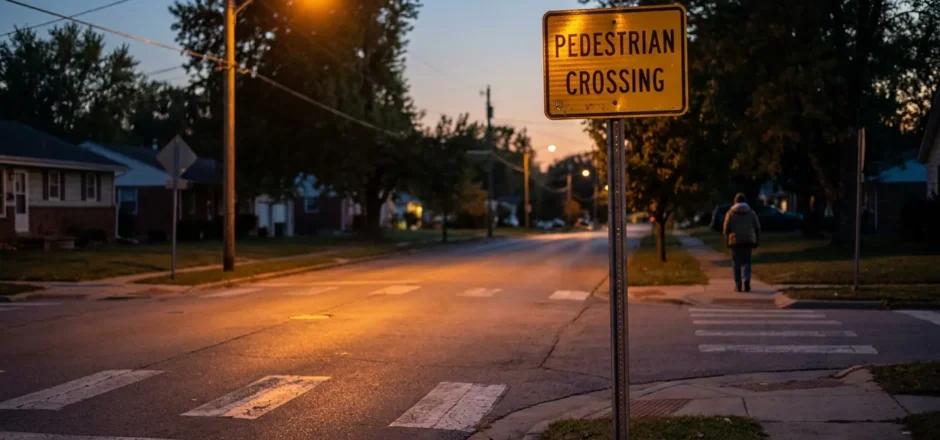
Pedestrian deaths involving fleeing drivers are a growing problem across the state. When a driver hits someone on foot and panics, they often flee to avoid liability. Kansas City’s mix of busy arterials, highway ramps, and neighborhoods without continuous sidewalks adds to the risk.
Missouri law places clear limits on where people may walk relative to the road.
Where sidewalks are provided it shall be unlawful for any pedestrian to walk along and upon an adjacent roadway.
When sidewalks aren’t available, Missouri’s pedestrian roadway safety statute shifts to protect people on foot.
When practicable, pedestrians shall walk only on the left side of the roadway or its shoulder facing traffic which may approach from the opposite direction.
💡 Pro Tip: If you regularly walk in an area without sidewalks, facing oncoming traffic gives you a better chance to see and react to a vehicle. It can also matter later if a driver tries to shift blame onto the pedestrian.
What to Do After a Hit and Run Accident in Missouri
Knowing what to do after a hit and run accident in Missouri can protect both your family and any future claim. In the chaotic moments after a fleeing driver pedestrian Missouri crash, small steps taken early can preserve critical evidence.
- Call 911 immediately so police create an official report and emergency responders can help the injured.
- Write down anything you remember about the vehicle, such as color, make, partial plate, or direction of travel.
- Look for cameras nearby, including doorbell, traffic, and business security footage that may capture the fleeing driver.
- Gather witness names and phone numbers before people leave the scene.
- Seek medical care right away, even if injuries seem minor, and keep every record.
Documentation is the backbone of any hit-and-run injury claim in Kansas City. Because the driver isn’t present, your case may rely heavily on physical evidence, video, and witness accounts. For a deeper walkthrough, our guide on what to do after a hit and run accident in Missouri covers the practical steps in more detail.
💡 Pro Tip: Save the responding officer’s name and the report number. That single piece of paperwork often becomes the thread that connects insurance, criminal investigation, and your civil claim.
Missouri’s Wrongful Death Law and Who Can File
When a pedestrian is killed, Missouri gives specific family members the right to seek compensation. This right didn’t exist at common law; Missouri enacted a similar statute to Lord Campbell’s Act in 1855 "for the better security of life, property and character."
A claim generally arises whenever a death results from another party’s wrongful conduct. Under the Missouri wrongful death statute, liability attaches
whenever the death of a person shall be caused by a wrongful act, neglect or default of another.
The framework is codified in Missouri Revised Statutes section 537.080, with related provisions through 537.100.
Who Has Standing to Bring the Claim
Missouri uses a tiered class system to decide who may sue.
If there are no class one persons, suit may be brought by the brother or sister of the deceased, or their descendants, and failing that, by a plaintiff ad litem.
Class one generally includes the spouse, children or descendants of deceased children, and the parents of the person who died.
| Class | Who May File |
|---|---|
| Class One | Spouse, children (or descendants of deceased children), or parents |
| Class Two | Brother or sister, or their descendants |
| Class Three | A court-appointed plaintiff ad litem |
The law also limits how many suits can be filed.
Only one action may be brought under this section against any one defendant for the death of any one person.
That means families need to coordinate rather than file separate lawsuits.
When the At-Fault Driver Is Also Deceased
A hit-and-run claim can sometimes proceed even if the driver later dies. Missouri law allows a personal representative to stand in for the person who caused the harm.
The right of action for death or personal injury is sufficient to authorize and to require the appointment of a personal representative for the person liable for such death or injury.
Additionally, personal injury claims survive the victim’s death, because
causes of action for personal injuries shall not abate by reason of his death but shall survive to the personal representative of such injured party.
The Deadlines That Can Make or Break Your Case
Missouri sets firm time limits, and missing them can end a claim before it begins. For wrongful death, the three-year filing deadline is direct.
Every action instituted under section 537.080 shall be commenced within three years after the cause of action shall accrue.
This is a civil deadline, separate from any criminal investigation.
Filing on time is only the first hurdle. Missouri’s wrongful death statute sets a specific service rule that applies once the limitations period has run.
Any service on a defendant after the statute of limitations has expired shall be made within one hundred eighty days of the filing of the petition, or the court shall dismiss the action against the defendant.
When service is made while the limitations period is still open, it is governed by ordinary rules of civil procedure. In a hit-and-run case, locating and serving a fleeing driver can be difficult, which is why building the case quickly is important.
There is a limited tolling rule that may apply when a driver leaves the state.
Time during which a defendant shall then or thereafter be absent or depart from the state, so that personal service cannot be had, is not counted toward the limitations period.
Courts interpret tolling exceptions narrowly, so this should never be treated as automatic.
💡 Pro Tip: Don’t wait for the police investigation to wrap up before talking with an attorney. Civil deadlines run on their own schedule, and evidence like video footage is often deleted within days or weeks.
How Fault and Liability Get Sorted Out
Missouri’s rules on shared fault directly affect what your family may recover. Under Missouri’s tort liability apportionment statute,
if a defendant is found to bear fifty-one percent or more of fault, then such defendant shall be jointly and severally liable for the amount of the judgment rendered against the defendants.
Punitive damages are treated differently from compensatory damages. For conduct like fleeing the scene, a jury may consider punitive damages, but the apportionment rule is stricter.
Defendants are only severally liable for the percentage of punitive damages for which fault is attributed to such defendant by the trier of fact.
Working with a local advocate who knows these statutes can steady an overwhelming process. Our firm brings more than 50 years of combined experience, a proven track record with serious and high-value matters including wrongful death, and recognition as a #1 voted accident lawyer in the Northland. A trusted Kansas City pedestrian accident attorney on our team can walk you through your options plainly.
Frequently Asked Questions
1. Can I still recover compensation if the hit-and-run driver is never found?
Sometimes yes, depending on your coverage. Uninsured motorist coverage and other benefits may apply when a fleeing driver isn’t identified. Review your policy with someone who handles these matters regularly.
2. How long does my family have to file a wrongful death claim in Missouri?
Generally three years from when the cause of action accrues. That deadline is set by statute, though limited exceptions such as a defendant leaving the state may affect timing. Acting promptly is safest.
3. Who in my family is allowed to file the lawsuit?
Missouri’s tiered class system decides this. Spouses, children, and parents generally come first, followed by siblings or their descendants, and finally a court-appointed plaintiff ad litem. Only one action can be brought against any one defendant.
4. Is the criminal case against the driver the same as our civil claim?
No, they are separate processes. A criminal case addresses whether the driver broke the law, while a civil claim seeks compensation for your family’s losses. One can proceed even if the other is delayed or resolved differently.
5. What kinds of losses can a wrongful death claim cover?
Recoverable losses may include medical expenses, funeral costs, lost financial support, and loss of companionship. The specific damages depend on the facts and evidence.
Moving From Grief Toward Answers
A hit-and-run pedestrian death leaves families carrying a weight no one should face alone. Missouri law provides a real framework for accountability, from the wrongful death statute to the rules on deadlines, standing, and shared fault, but those protections only work when someone acts within the time limits and preserves evidence. The steps you take in the first days and weeks often shape everything that follows.
At Northland Injury Law, we treat clients like neighbors, not case numbers, and we back our commitment with a 30-Day Satisfaction Guarantee. If your family has lost someone or been seriously hurt in a pedestrian crash, connect with our Northland team through our online case review or call us today at 816-400-4878. We’re here to listen, explain your options in plain language, and help you move from anxiety toward confidence.



© 2026 Northland Injury Law • All Rights Reserved •