
 Spanish
When the Company That Hired the Truck Shares the Blame
Key Takeaways: Negligent selection of a motor carrier is a direct negligence claim against a broker or shipper that hired a trucking company it knew or should have known was unsafe, rather than a claim based on the driver’s conduct. A plaintiff generally must show a duty of reasonable care in choosing a carrier, the carrier’s unfitness, the hiring party’s actual or constructive knowledge of it, foreseeability, and causation. Missouri’s common law rule, established in McHaffie v. Bunch, 891 S.W.2d 822 (Mo. 1995), bars many derivative claims against a motor carrier once it admits the driver was acting within the scope of employment, though the rule preserves limited exceptions, including certain punitive damage claims. Claims against brokers raise an additional issue: whether federal preemption under the FAAAA bars or permits the claim. The U.S. Supreme Court resolved the circuit split on this issue in Montgomery v. Caribe Transport II, LLC (May 14, 2026), unanimously holding that state-law negligent selection claims against freight brokers are saved by the FAAAA’s safety exception. These claims are generally subject to Missouri’s five-year limitations period in § 516.120(4) RSMo, but wrongful death actions have a three-year deadline, governmental-entity claims follow different tracks, and key broker records disappear quickly. Because a negligent selection claim may open a second source of coverage in catastrophic cases, an early review of the facts and evidence preservation are critical.
Negligent selection of a motor carrier is a direct negligence claim against the business that chose an unsafe trucking company, rather than a claim against the driver who caused the crash. If a freight broker or shipper hired a carrier it knew or should have known was dangerous, and that decision helped cause your injuries, Missouri law may allow you to hold that hiring party accountable alongside the driver and carrier, subject to statutory and federal limitations discussed below. This matters in serious wrecks on I-29, U.S. 36, or the Belt Highway here in St. Joseph, because the trucking company’s insurance policy is sometimes not enough to cover a catastrophic injury or death. A negligent selection claim may open a second door to recovery.
If you are trying to sort out who is responsible after a truck crash near St. Joseph, our team at Northland Injury Law is glad to talk it through with you. Call us at 816-400-4878 or reach out to our team today, and we will explain your options in language that actually makes sense. No pressure, no legal jargon, just answers.
How Freight Broker Liability Negligent Selection Claims Work
A negligent selection claim rests on a simple idea: a company that puts freight on the road may owe a duty of reasonable care in choosing who hauls it. Generally, a party who hires an independent contractor is not liable for the contractor’s negligence, but recognized exceptions exist, including negligence in selecting an incompetent contractor. Scholarship in the Missouri Law Review situates this theory within long-standing common law principles of duty, foreseeability, and breach.
To pursue such a claim, a plaintiff generally must prove several connected elements, though courts may weigh these factors differently depending on discovery:
- The hiring party owed a duty of reasonable care in selecting a competent, safe motor carrier
- The carrier was in fact incompetent or unfit
- The hiring party knew or should have known of that unfitness, based on prior safety violations, poor safety data, or a troubling accident history
- The harm was a foreseeable result of hiring that carrier
- The negligent selection caused the injuries and damages claimed
The knowledge element is often where these cases are won or lost. Records available to the broker before the load moved can be powerful, which is why carrier vetting practices and FMCSA carrier selection data matter so much. FMCSA has cautioned that some safety measurement percentile data is not a definitive determination of a carrier’s safety fitness, so the weight such data carries can itself be contested. A company that reviewed nothing, or reviewed the data and hired the carrier anyway, may face a very different case than one that documented a careful screening process.
Why Missouri’s Common Law Rule Changes the Analysis
Missouri has a specific common law rule governing derivative negligence claims against motor carriers. The Missouri Supreme Court’s decision in McHaffie v. Bunch, 891 S.W.2d 822 (Mo. 1995), addresses actions for negligent entrustment, hiring, retention, supervision, or training brought against a motor carrier.
Under McHaffie, these derivative claims are generally barred once the motor carrier admits or stipulates that the driver was acting within the course and scope of employment at the time of the incident. When that happens, the case typically shifts to a respondeat superior theory, meaning the carrier answers for the driver’s conduct rather than for its own hiring decisions. Missouri courts have continued to develop the contours of this doctrine in subsequent decisions.
Exceptions That May Keep a Claim Alive
The McHaffie rule does not eliminate every direct negligence claim. Recognized exceptions exist, including claims for punitive damages against the motor carrier based on its own conduct. Whether an exception applies is fact-dependent and frequently contested.
How Brokers and Shippers Fit Differently
A motor carrier that admits agency may invoke the common law bar established in McHaffie, while claims against a freight broker or shipper that selected the carrier are analyzed under a separate threshold question: whether the claim is preempted by the Federal Aviation Administration Authorization Act, which bars state laws related to a broker’s prices, routes, or services. The U.S. Supreme Court resolved the circuit split on this issue in Montgomery v. Caribe Transport II, LLC (May 14, 2026), unanimously holding that state-law negligent selection claims against freight brokers are saved by the FAAAA’s safety exception because they concern motor vehicles. A Saint Louis University Law Journal Online article examines Missouri’s personal injury statute of limitations and proposed tort reform legislation that could affect the filing window for these types of claims.
Vicarious Liability Versus Direct Negligence
These two theories are often confused, and the difference drives strategy. Vicarious liability generally holds an employer responsible for what its employee did within the scope of employment. Direct negligence, including negligent selection, focuses on what the company itself did, which can matter even when the carrier was an independent contractor rather than an employee.
| Theory | Whose conduct is at issue | Typical target |
|---|---|---|
| Respondeat superior | The driver’s conduct | The employing motor carrier |
| Negligent selection | The hiring company’s vetting decision | Broker or shipper |
| Negligent entrustment | Trusting an unfit driver or vehicle | Carrier or owner, subject to the McHaffie rule |
The Missouri Deadline for Filing a Negligent Selection Claim
Because negligent selection is a tort claim, not a contract claim, it generally falls under Missouri’s five-year limitations period. Section 516.120(4) RSMo permits an action to be brought within five years for "an action for any injury to the person or rights of another, not arising on contract and not herein otherwise enumerated." You can read the categories covered by the five-year statute of limitations in the state’s official statutory database.
Treating five years as a comfortable cushion is a mistake we see people regret. Wrongful death claims must generally be filed within three years under § 537.100 RSMo, claims involving governmental entities can involve separate notice requirements and sovereign immunity defenses, and tolling or accrual arguments may be interpreted narrowly by courts. Missouri lawmakers have also considered shortening the filing window for personal injury suits in past sessions, so the deadline landscape isn’t frozen in place. Only an attorney reviewing your specific facts can identify which deadline governs your claim.
💡 Pro Tip: Broker records, load confirmations, and carrier safety screening files are often retained for only a short period. Sending a written preservation demand early can protect evidence a negligent selection claim may depend on years later.
Evidence That Builds a Negligent Hiring Truck Crash Case
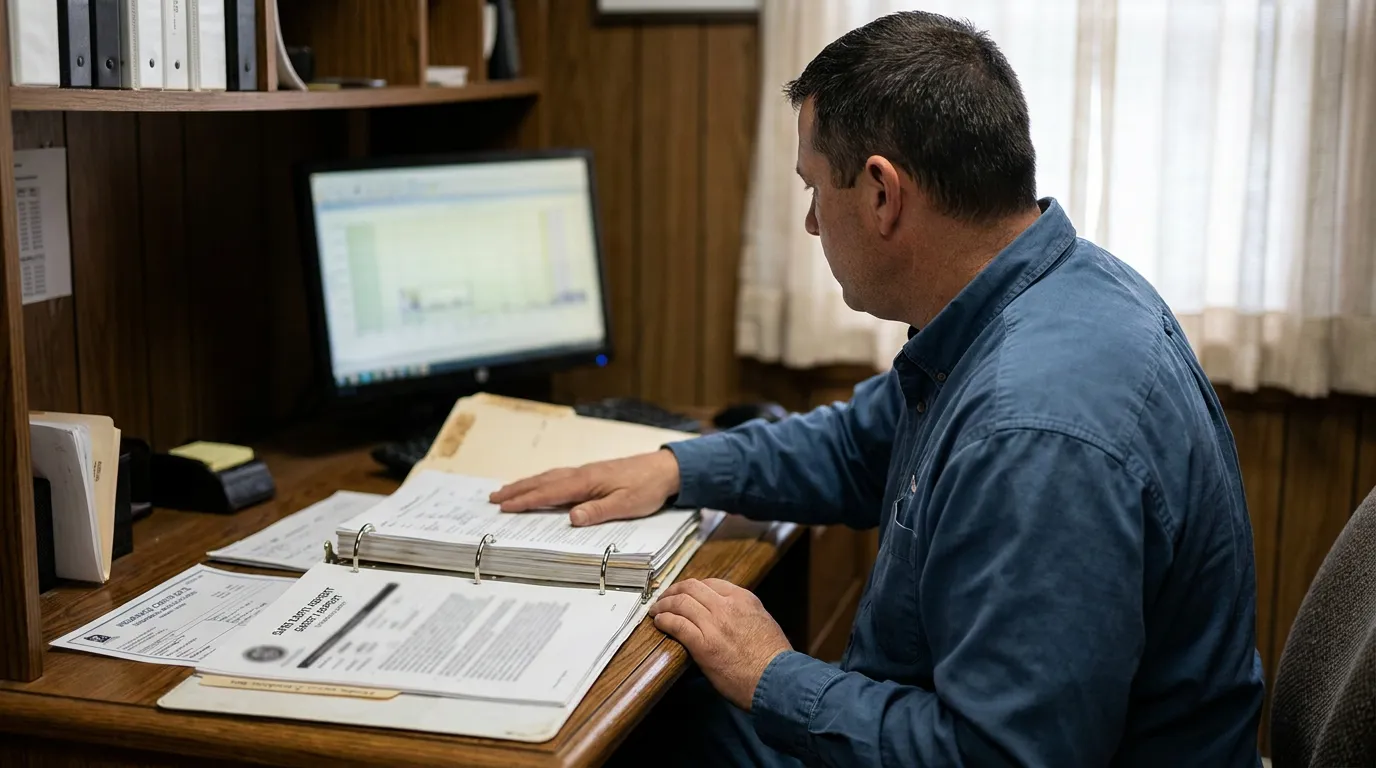
The proof in these cases often comes from paper and data rather than eyewitnesses. We routinely look at the broker-carrier contract, load tender documents, the carrier’s operating authority and insurance filings, FMCSA safety measurement data available at the time of hiring, prior crash reports, and internal emails about carrier approval. Pair that with the driver’s logs, ELD data, and the truck’s electronic control module data, and a clearer picture of what went wrong tends to emerge.
Commercial cases often involve layers that ordinary car crash claims may not have. For a broader look at how these claims differ, our discussion of commercial vehicle accident claims walks through the moving parts. Multiple insurers, multiple defendants, and federal safety regulations may all come into play at once.
💡 Pro Tip: Do not give a recorded statement to a trucking or broker insurer before you understand how the liability theories in your case fit together. Early statements are often used later to narrow the claim.
What Serious Injury Cases Require From a Legal Team
Catastrophic truck crash cases are high-stakes, policy-limits matters, and they deserve to be handled that way. Our attorneys bring more than 50 years of combined experience to permanent disability, wrongful death, and large commercial vehicle claims, with past recoveries for clients reaching into the $1.5 million to $2 million range. Past results do not guarantee or predict a similar outcome in any future case, because every case depends on its own facts, liability, insurance coverage, and damages. Voted #1 Accident Lawyer and Best of the Northland of Kansas City, our team has earned trust the old-fashioned way, by keeping people informed at every step.
We are not a firm that talks at you. Eric Bartlett has spent years volunteering across the KC Northland, and that same neighborly approach shows up in how we handle cases. If you are looking for a St. Joseph truck accident attorney who will explain the hard parts honestly, we would welcome the conversation.
Frequently Asked Questions
1. Can I sue a freight broker if the truck driver caused the crash?
Yes, in many cases, depending on what the broker knew and how it chose the carrier. A broker may face direct liability if it failed to exercise reasonable care in selecting a competent carrier and that failure foreseeably contributed to the harm. The U.S. Supreme Court held in Montgomery v. Caribe Transport II, LLC (May 14, 2026) that such claims are saved by the FAAAA’s safety exception and are not federally preempted. Outcomes still vary based on the specific facts and applicable legal framework.
2. Does Missouri’s common law rule always block negligent hiring claims against carriers?
No, though the McHaffie rule does bar many of them once agency is admitted. Recognized exceptions exist, including certain punitive damage claims based on the carrier’s own conduct. Whether an exception applies is fact-specific, and Missouri courts continue to develop the doctrine.
3. How is negligent entrustment in Missouri different from negligent selection?
Negligent entrustment generally involves entrusting a vehicle or task to someone known to be unfit, while negligent selection focuses on the decision to hire a particular carrier. Both are direct negligence theories. Claims against a motor carrier under either theory may be affected by the McHaffie rule, while claims against brokers and shippers are analyzed differently.
4. How long do I have to file a negligent selection claim in Missouri?
Often five years under § 516.120(4) RSMo, subject to exceptions. Wrongful death claims are generally subject to a three-year deadline, and different requirements can apply to claims against public entities. Waiting is risky because evidence disappears long before the deadline does.
5. What if the carrier had low insurance limits?
A negligent selection claim against a broker or shipper may provide access to additional coverage if such a claim is viable. That is often the reason these theories matter in catastrophic cases. It depends on the evidence supporting the hiring party’s knowledge and conduct.
Where This Leaves You
Negligent selection is one of the more technical corners of Missouri truck accident law, and it can also be one of the most valuable. The theory recognizes that safety on our highways depends not just on drivers, but on the companies that decide which carriers get the keys. Missouri’s common law framework and overlapping federal law limit some of these claims while leaving room for others, which is exactly why an early, careful review of the facts matters so much in a serious injury or wrongful death case.
You do not have to figure this out alone. Reach out to Northland Injury Law for a straightforward conversation about your crash, call 816-400-4878, or start your free case review whenever you are ready. We back our work with a 30-Day Satisfaction Guarantee, because you should feel confident about who is standing beside you.
Disclaimer: This content is for informational purposes only and is not legal advice, and it does not create an attorney-client relationship. Laws change and every case is unique, so results may vary. Consult an attorney about your specific circumstances.